
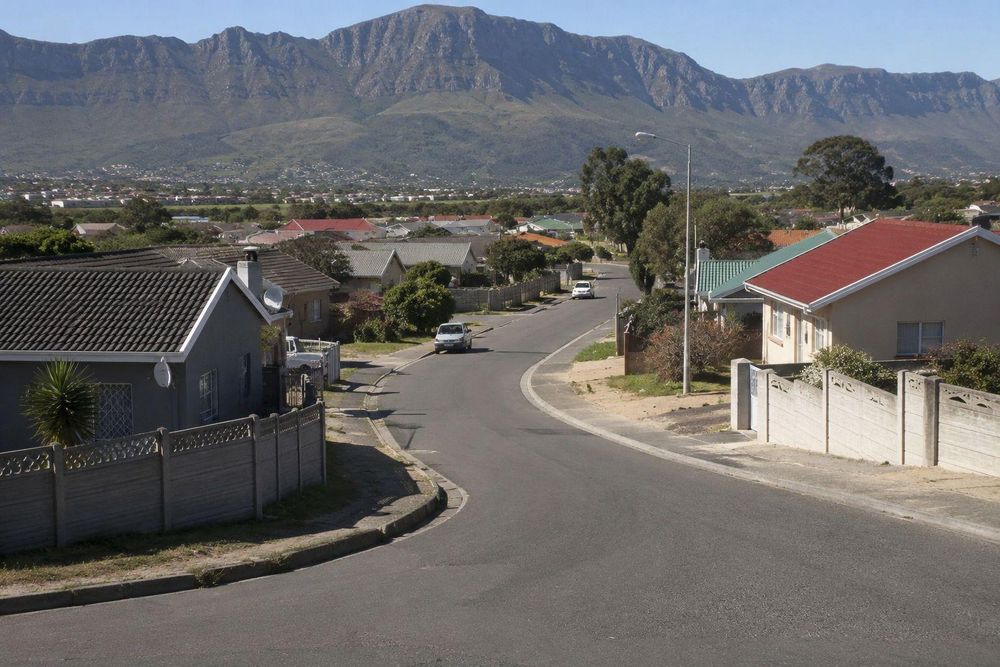
The South African housing market has been a topic of great interest for both homeowners and investors alike, particularly given its notable growth over the past year. Recent data reveals that, while the nation’s average property values increased by 7.8% as of January 2026, this growth has not been uniform across all regions. Understanding these dynamics is crucial for anyone looking to navigate the complexities of property investments in the country.
The residential property market in South Africa has displayed a fascinating blend of rapid growth in some areas alongside stagnation in others. According to the latest findings from Statistics South Africa’s Residential Property Price Index, certain provinces have outperformed traditional property hotspots, providing insights into where savvy investors might want to focus their attention. Notably, Limpopo has emerged as a surprising leader in this year’s growth story, with a remarkable 18.5% increase in property values. This performance suggests that there are lucrative opportunities outside the usual metropolitan areas.
However, while Limpopo’s growth rate is impressive, it is essential to consider the overall value of properties. The Western Cape, despite not having the highest percentage increase, remains the cornerstone of South Africa’s property market. With an annual house price inflation of 11%, the Western Cape significantly contributes to the national landscape due to its higher average property values. For instance, homeowners in Cape Town, with an average property priced around R2.3 million, saw an increase of approximately R253,000 in their property value over the year. In contrast, a typical property in Polokwane, which boasts the highest percentage return, gained about R185,000. This stark difference illustrates that while percentage growth is essential, the absolute value gained is equally critical for investors.
In addition to Limpopo and the Western Cape, other provinces have also shown remarkable growth. The Northern Cape recorded a 10.8% increase, and Mpumalanga followed closely with a 10.7% rise. Both regions outperformed Gauteng, which saw a modest growth rate of 4.5%, as well as the Eastern Cape, which lagged behind with an increase of just 3.2%. This trend indicates that the narrative surrounding South Africa’s property market is shifting; the focus is moving away from the traditional appeal of major cities toward regions that may have been previously overlooked by investors.
One of the most compelling insights from the statistics is the widening gap between different segments of the housing market. Newly sold properties saw only a 2.0% growth rate, while resold properties experienced a much more robust increase of 7.6%. This disparity points to a market where existing homeowners have benefited more substantially from the recovery than first-time buyers. As prices continue to rise, potential buyers may find it increasingly challenging to enter the market, which could lead to a further concentration of wealth among those who already own property.
For investors, this landscape presents both challenges and opportunities. On one hand, the uneven growth might indicate a need for a more diversified investment strategy, targeting emerging markets like Limpopo or Mpumalanga where higher returns are being realized. On the other hand, established markets such as the Western Cape still offer significant value due to their high property values, which can provide a safety net against broader economic fluctuations.
In conclusion, the South African housing market is undergoing a fascinating transformation characterized by divergent growth rates across different regions. While Limpopo has captured attention with its impressive percentage gains, the Western Cape remains a powerhouse due to its substantial monetary returns. Investors should carefully consider the implications of these trends and seek to diversify their portfolios to capitalize on regions that are outperforming traditional hotspots. As the property landscape evolves, staying informed about market dynamics will be key to making sound investment decisions in this complex and ever-changing environment.