
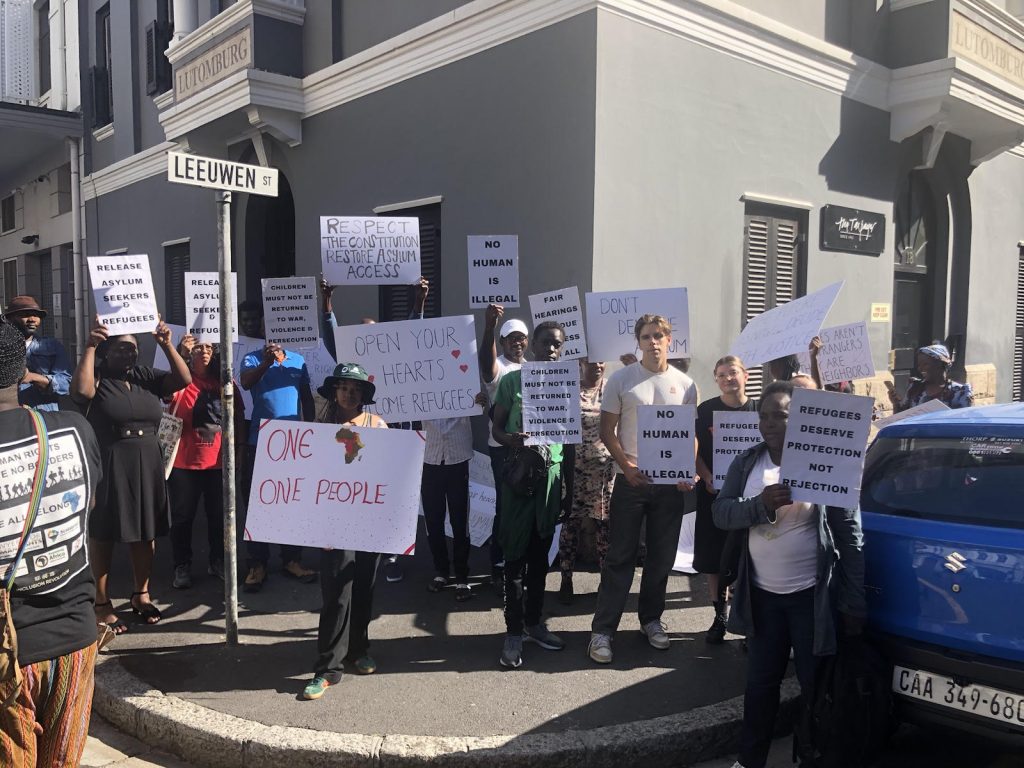
In a landmark decision, South Africa’s Constitutional Court has affirmed the rights of asylum seekers, reinforcing the principle that those seeking refuge cannot be deported without a fair opportunity to engage with the asylum process. This ruling comes at a critical time, as it challenges amendments to the Refugees Act that had imposed stringent requirements on asylum seekers, particularly concerning transit visas. The implications of this ruling are significant, not just for the individuals seeking asylum, but also for the broader landscape of immigration and human rights in South Africa.
The core of the ruling revolves around the unconstitutionality of certain provisions in the Refugees Act, which allowed immigration officials to deport asylum seekers who arrived without a transit visa. This visa, which is issued at points of entry, is intended to facilitate an individual’s journey to a refugee reception center where they can formally apply for asylum. The court’s unanimous decision highlights the violation of the international legal principle known as “non-refoulement,” which prohibits the return of individuals to countries where they might face persecution or harm.
Before delving into the specifics of the ruling, it’s essential to understand the context. The Scalabrini Centre of Cape Town had previously challenged the amendments made to the Refugees Act that took effect in January 2020. These amendments effectively limited access to the asylum system for individuals without valid transit visas, placing the authority in the hands of Home Affairs officials who could arbitrarily decide on the fate of these individuals. The Scalabrini Centre argued that such a system not only hindered access to asylum but also created an environment ripe for abuse and inconsistency in decision-making.
In the court’s judgment, Justice Steven Majiedt articulated that prior to the amendments, any person presenting themselves at a Refugee Reception Office could initiate their application for asylum, irrespective of their immigration status. The new provisions fundamentally altered this practice by introducing “procedural filters,” which inadvertently obstructed asylum seekers from having their cases heard on their merits. This change meant that individuals could face deportation if they were unable to provide satisfactory reasons for not possessing a transit visa—a process that lacked clear definitions and guidelines, which could lead to arbitrary decisions.
The court’s ruling is a significant step toward ensuring that all asylum seekers are afforded protection under the principle of non-refoulement until their claims have been thoroughly examined and either accepted or rejected. The ruling clarifies that this protection can only be bypassed if there are legitimate grounds to consider an individual a threat to national security or if they have been convicted of serious crimes.
Key takeaways from this ruling include:
1. **Protection of Asylum Seekers**: The ruling reinforces the rights of asylum seekers, ensuring they cannot be deported without proper access to the asylum process.
2. **Unconstitutionality of Procedural Filters**: The court found that the amendments introduced unnecessary barriers that hindered fair access to the asylum system.
3. **Clarity on Non-Refoulement**: The principle of non-refoulement remains a cornerstone of refugee law, protecting individuals from being sent back to situations of danger.
4. **Arbitrary Decision-Making Concerns**: The court highlighted the risks associated with vague requirements that could lead to inconsistent application of the law by officials.
For traders and investors, this ruling may signal a shift in the socio-political landscape of South Africa, particularly in terms of human rights and immigration policies. A more humane approach to asylum seekers may enhance South Africa’s international standing and could influence foreign investment, especially from countries that prioritize human rights. Furthermore, businesses may need to consider their corporate social responsibility in light of these developments, as public sentiment increasingly favors ethical practices and inclusivity.
In conclusion, the Constitutional Court’s ruling is not just a legal victory for asylum seekers but a reaffirmation of South Africa’s commitment to upholding human rights. It challenges the notion that immigration controls should come at the expense of compassion and justice. By ensuring that asylum seekers have fair access to the asylum system, South Africa sets a precedent for other nations grappling with similar issues. As the implementation of this ruling unfolds, it will be crucial for stakeholders, including government agencies, NGOs, and the business community, to work collaboratively to foster a system that respects the rights and dignity of all individuals seeking refuge.