
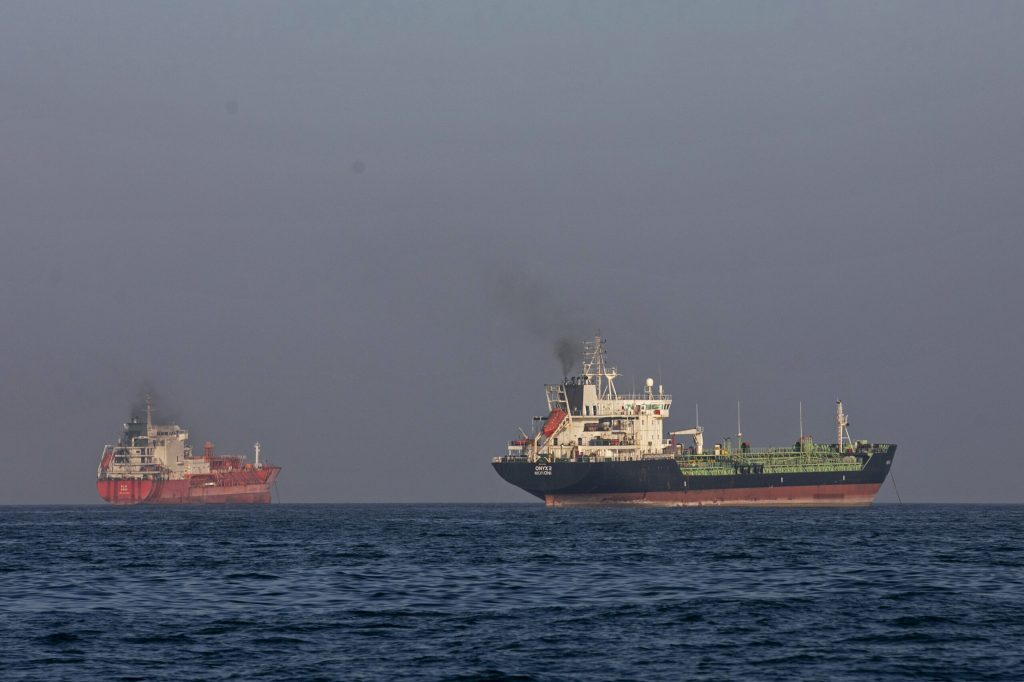
In the ever-evolving landscape of global energy markets, the recent surge in oil prices serves as a stark reminder of how geopolitical conflicts can have immediate and profound impacts on commodities. With escalating tensions between the United States and Iran, driven by military strikes and retaliatory actions, oil prices have seen significant fluctuations, raising concerns for traders, investors, and consumers alike.
The backdrop of this surge is centered around the Strait of Hormuz, a critical maritime passage that serves as a conduit for a substantial portion of the world’s oil supply. The recent military actions taken by U.S. forces in response to Iranian threats have not only disrupted the status quo but have also heightened fears of potential supply constraints, which in turn have driven prices upward.
On Wednesday, oil futures experienced a notable increase, with Brent crude rising more than 5%, and continued to climb, reaching above $79 a barrel. Meanwhile, West Texas Intermediate (WTI) also saw a rise, hovering near $74. This upward trend in oil prices can be attributed to the heightened risk perception surrounding energy supplies from the Middle East, as U.S. Central Command reported additional strikes aimed at diminishing Iran’s capability to disrupt navigation in this vital waterway.
As tensions continue to escalate, the implications for the energy market are significant. U.S. President Donald Trump’s announcement that the interim peace agreement with Iran is effectively terminated, coupled with the possibility of reinstating a blockade on Iranian ports, casts a long shadow over the energy landscape. The potential for further military action, including a “takeover” of export facilities like Kharg Island, amplifies fears among traders and investors about the stability of oil supplies.
The impact of these geopolitical dynamics is not merely theoretical. Vessel-tracking data indicates a noticeable decrease in maritime traffic through the Strait of Hormuz, as operators become more cautious in response to the military actions. This shift highlights the precarious nature of the situation and reflects the broader implications for global energy markets.
Analysts are weighing in on the potential outcomes of this unrest, with Scott Shelton from TP ICAP suggesting that if the Strait of Hormuz were to close entirely, we could expect oil prices to escalate by another $10 per barrel. Conversely, if oil continues to flow through the strait, the price increase may be limited. Nonetheless, the uncertainty surrounding the region poses a significant challenge for producers and traders who rely on the reliability of this critical shipping lane.
As tensions flare, other regional players are also responding. Reports from Kuwait indicate that their military has been on alert, responding to missile and drone threats, which further illustrates the breadth of the conflict. Additionally, Iran’s state media has claimed that the Islamic Revolutionary Guard Corps has launched retaliatory strikes against U.S. bases in neighboring countries, indicating a broader escalation of hostilities.
The historical context of the Strait of Hormuz cannot be overlooked. Following the outbreak of conflict earlier this year, Iranian forces had already brought maritime transit to a virtual standstill, forcing regional producers to shut in oil fields as storage capacities neared their limits. The renewed hostilities pose a risk of further production disruptions, as highlighted by Henry Hoffman, co-portfolio manager of the Catalyst Energy Infrastructure Fund, who noted that a larger escalation could lead to more substantial damage to energy infrastructure.
Importantly, the U.S. government’s recent revocation of a sanctions waiver that previously allowed Iran to sell oil marks a significant shift in policy and adds another layer of complexity to the situation. This reversal not only underscores the deteriorating relationship between the U.S. and Iran but also signals to the market that supply disruptions could become a reality.
For traders and investors, the current state of affairs represents both a challenge and an opportunity. While volatility can bring about risks, it also creates the potential for profit in trading strategies that capitalize on price movements. Understanding the geopolitical landscape and its implications for oil supply is crucial for making informed decisions in this uncertain environment.
In conclusion, the recent surge in oil prices fueled by escalating tensions in the Middle East serves as a reminder of how closely intertwined geopolitics and commodity markets are. The situation remains fluid, and the potential for further conflict looms large, making it imperative for stakeholders in the energy sector to remain vigilant and adaptable. As the world watches closely, the dynamics of supply, demand, and geopolitical risk will continue to shape the future of oil prices and, by extension, the global economy.