
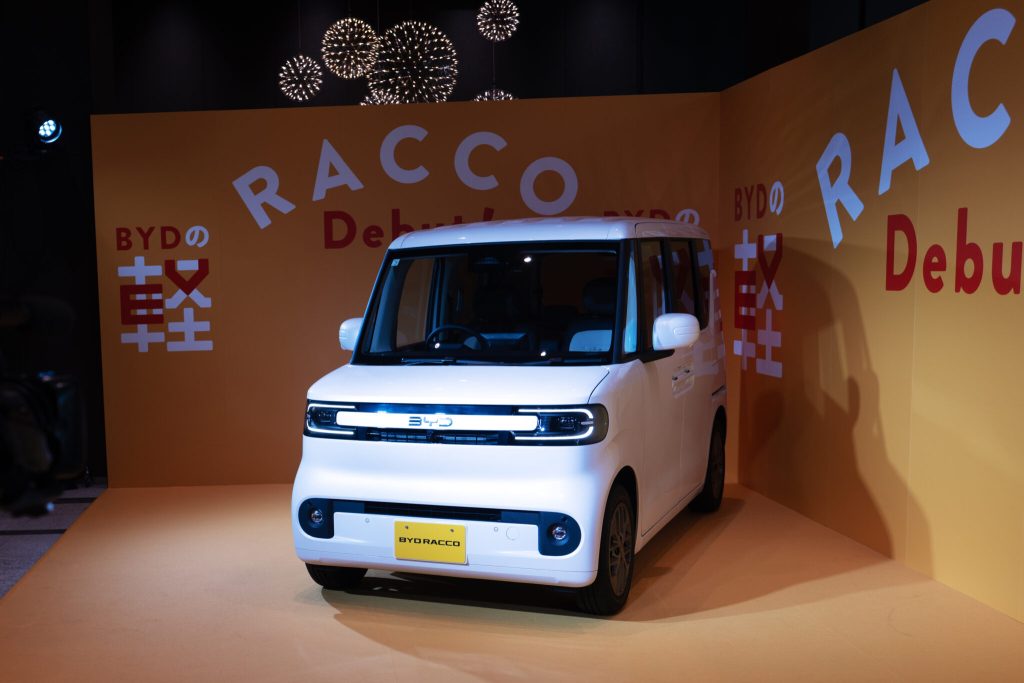
In a move that could shake up Japan’s automotive landscape, BYD Co., the Chinese electric vehicle (EV) manufacturer, is making its entrance into the competitive kei car segment with the launch of its new model, the Racco. Priced attractively and designed for urban mobility, the Racco aims to challenge established domestic brands in a market where compact vehicles reign supreme. This blog post delves into the significance of BYD’s entry, its implications for the Japanese automotive industry, and what this means for consumers and investors alike.
Japan’s automotive sector is unique, with a notable preference for kei cars, a category of small vehicles that combine affordability, efficiency, and practicality. These lightweight cars typically represent around 40% of new vehicle sales and are particularly well-suited for Japan’s tight urban spaces and rural roads. The Racco, with a starting price under ¥2 million (approximately $12,210), is positioned as a budget-friendly alternative to the Nissan Sakura, currently the best-selling electric vehicle in the country. This entry-level pricing, coupled with a minimum range of 210 kilometers (about 130 miles), makes it an attractive option for budget-conscious consumers.
The kei car market is dominated by Japanese manufacturers, with Suzuki, Daihatsu, and Honda holding nearly 80% of the market share. This presents a formidable challenge for BYD as it seeks to establish itself in a territory where foreign brands have struggled to gain a foothold. The company’s strategy to debut a minicar signals its determination to engage with Japanese consumers and signifies a long-term commitment to the market, despite a lukewarm reception since its initial entry over three years ago.
One of the key aspects of the Racco’s appeal is its cost-effectiveness. With new gasoline-powered kei cars available for as low as ¥1.2 million, BYD’s pricing strategy is crucial in attracting buyers. The inclusion of government subsidies, which can significantly reduce the overall cost, further enhances its competitiveness. For instance, eligible buyers can receive roughly ¥150,000 in subsidies, making the Racco’s effective price even more appealing. This financial incentive is particularly important in a market where price sensitivity is high.
The Japanese public has historically shown a cautious attitude towards electric vehicles, which presents another hurdle for BYD. The company must navigate not only brand recognition but also consumer trust in electric technology. Despite these challenges, the increasing interest in sustainability and environmental consciousness among Japanese consumers may work in BYD’s favor, especially as more people seek alternatives to traditional combustion engines.
Key takeaways from BYD’s strategy include the following points:
1. **Affordable Pricing**: The Racco’s price point is strategically set to attract a broad range of consumers, particularly those looking for an economical vehicle.
2. **Government Subsidies**: The availability of subsidies can play a critical role in lowering the purchase price, making electric vehicles more appealing to potential buyers.
3. **Urban Mobility Focus**: The design of kei cars like the Racco is ideal for navigating Japan’s narrow streets and urban environment, catering to the practical needs of city dwellers.
From a trader or investor perspective, the introduction of the Racco could signal broader trends in the automotive industry. Investors might consider the following insights:
– **Market Potential**: BYD’s entry into the Japanese market could indicate a growing demand for electric vehicles in Asia, prompting investors to watch for similar moves from other manufacturers.
– **Competitive Landscape**: As foreign brands attempt to carve out a niche in Japan’s automotive market, investors should keep an eye on how domestic brands respond to increased competition.
– **Sustainability Trends**: The push for EVs aligns with global sustainability initiatives, making companies focused on electric mobility more attractive to environmentally conscious investors.
In conclusion, BYD’s launch of the Racco represents a significant development in Japan’s automotive landscape, particularly within the kei car segment. While challenges remain, particularly in terms of consumer acceptance and brand recognition, the Racco’s affordable pricing, combined with government incentives, positions it favorably among budget-conscious buyers. For investors, this move by BYD could indicate potential growth in the electric vehicle sector, reflecting broader trends that emphasize sustainability and innovation. As the automotive industry continues to evolve, the outcome of this new competition will be closely watched by both consumers and investors alike.