
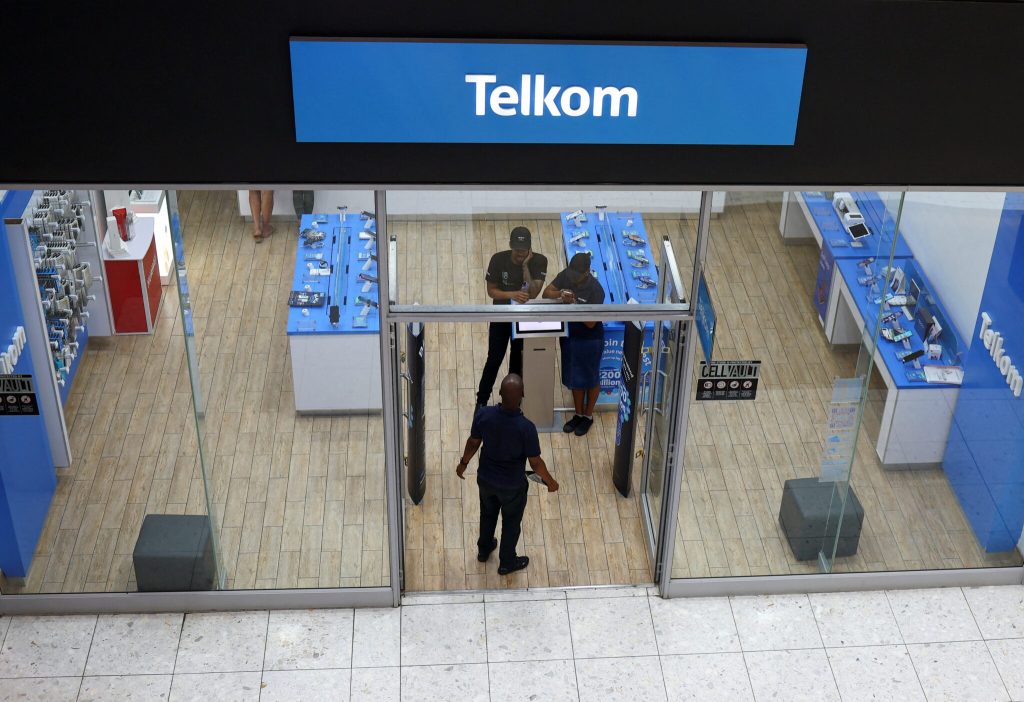
In the fast-evolving telecommunications sector, companies must adapt quickly to changing consumer demands and technological advancements. Telkom SA, one of South Africa’s prominent telecom operators, has recently demonstrated its ability to thrive amid these challenges. The company reported impressive financial results for the first quarter of the 2027 fiscal year, showcasing a solid growth trajectory driven primarily by its mobile and fibre data services. This blog post delves into Telkom’s financial performance, key drivers behind its growth, and implications for investors and analysts alike.
Telkom SA’s earnings report for the first quarter ended June 30, 2026, revealed a remarkable 10% increase in group EBITDA, which reached R3.079 billion. This growth can be attributed to a combination of robust demand for mobile and fibre data services and a disciplined approach to cost management. The company’s total revenue also experienced a notable uptick, rising 2.6% year-on-year to R11.096 billion. Perhaps most striking was the significant expansion in data revenue, which soared 8.8% to R6.922 billion. This increase elevated the contribution of data revenue to total group revenue to 62.4%, up from 58.8% in the previous year.
A critical analysis of Telkom’s performance reveals that the surge in data-related revenue, which gained R561 million from mobile and fibre services, effectively counterbalanced a decline of R124 million in traditional fixed-line revenue. This strategic pivot towards data-centric offerings aligns with global trends where telecommunications companies are increasingly focusing on mobile and broadband services as key revenue generators. The company’s EBITDA margin also saw an improvement, expanding by 1.8 percentage points to 27.7%, while overall operating expenses decreased by 1.9% during the quarter, highlighting effective cost containment measures.
The insights from Telkom’s leadership further illuminate the company’s strategic direction. CEO Serame Taukobong emphasized the positive trajectory of data-led growth, particularly from their Mobile and Openserve divisions. These segments not only delivered commendable revenue and EBITDA growth but also reflected a shift in consumer behavior towards mobile services. Taukobong noted that mobile service revenue re-accelerated compared to the previous quarter, showcasing a recovery in demand and a clear shift towards mobile connectivity.
The Consumer division of Telkom also made significant strides, reporting a 5.3% increase in revenue to R7.323 billion. This growth was primarily driven by mobile service revenue, which rose 6.4% to R5.731 billion, underscoring the growing preference for mobile services among South African consumers. The division’s EBITDA grew by an impressive 17.6% to R1.920 billion, resulting in an enhanced margin of 29.1%.
Openserve, Telkom’s wholesale infrastructure division, also performed admirably, achieving a 5.6% increase in overall revenue to R3.320 billion, with external revenue surging 18.2% to R1.475 billion. A remarkable 89.2% of Openserve’s total operating revenue came from fibre-related data, reflecting the division’s successful expansion of its operational footprint. The 10.7% increase in homes passed and a 16.6% increase in connected homes further illustrate Openserve’s commitment to enhancing fibre connectivity across South Africa. The division’s EBITDA grew by 6.7%, yielding a margin of 33.2%, showcasing its efficiency and effectiveness in operations.
For traders and investors, Telkom’s recent performance offers several key takeaways. Firstly, the company’s strategic focus on data services aligns with global market trends, indicating a sustainable growth path. The increasing contribution of mobile and fibre data revenue to the overall revenue mix positions Telkom favorably in an evolving telecom landscape. Additionally, the emphasis on cost management and operational efficiency presents a solid foundation for continued profitability in the coming quarters.
However, potential investors should also consider the challenges faced by certain segments of the company. The noted revenue pressures within the BCX division, attributed to declines in converged communications as well as IT hardware and software sales, indicate that not all areas are performing equally. Investors should keep an eye on how management addresses these issues as they continue to reshape the business.
In conclusion, Telkom SA’s latest financial results illustrate a strong performance driven by data-centric services and effective cost management. With a clear focus on expanding its mobile and fibre offerings, the company is well-positioned to navigate the challenges of the telecommunications industry. For investors, keeping a close watch on both the successes and challenges within Telkom’s divisions will be essential as they consider potential investment opportunities in this dynamic market.