
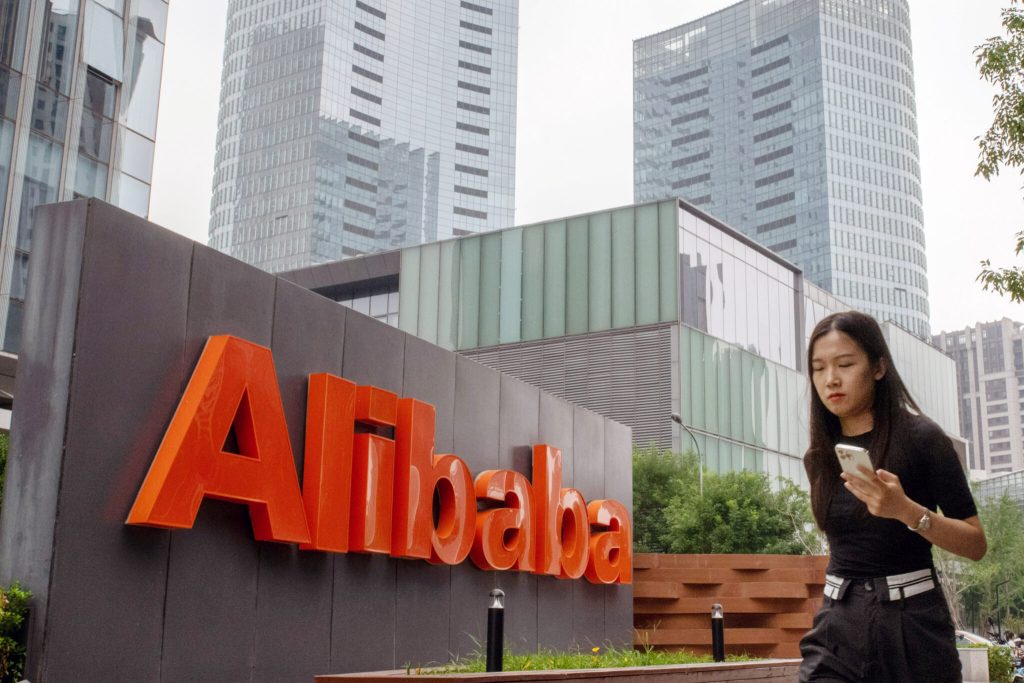
In the ever-evolving landscape of artificial intelligence, Alibaba Group Holding has made headlines with the release of its latest AI model, Qwen3.8-Max. This remarkable advancement not only positions Alibaba as a formidable player in the AI sector but also signals a significant shift in the competitive dynamics between Chinese and American tech giants. As the realm of AI continues to expand, understanding the implications of this development is crucial for investors and tech enthusiasts alike.
The Qwen3.8-Max model is a monumental achievement for Alibaba, boasting an impressive 2.4 trillion parameters. This places it on par with some of the top models globally, including Anthropic’s Fable 5, which has garnered attention for its advanced capabilities. The announcement comes shortly after the unveiling of Moonshot’s Kimi K3, which also aimed to showcase the rapid advancements made by Chinese developers in the AI arena. These developments are significant not only for the companies involved but also for the broader technology market, where perceptions of Chinese AI capabilities are often overshadowed by concerns over U.S. export controls and technological restrictions.
One of the most notable aspects of Qwen3.8-Max is its performance on various benchmarks. According to Alibaba, the model has demonstrated comparable, if not superior, performance to its American counterparts. This is particularly important as it challenges the narrative that U.S. models are leagues ahead of their Chinese counterparts. Vey-Sern Ling, managing director at Union Bancaire Privée, emphasizes that many investors may be underestimating the capabilities of Chinese AI models due to preconceived notions about U.S. dominance and the impact of chip restrictions. He argues that the gap is not as wide as it appears, and Alibaba’s latest offering serves as evidence of the closing divide.
As the market reacted to this news, Alibaba’s stock saw a significant increase, rising by as much as 7.3% in Hong Kong. This surge reflects investor optimism surrounding the potential of Qwen3.8-Max to disrupt the AI landscape and challenge established players. The enthusiasm is further fueled by Alibaba’s plans to release the model’s weights for public download, allowing developers and users to customize the technology for their specific needs. This move is expected to enhance accessibility and foster innovation within the AI community.
In terms of pricing, Alibaba has positioned Qwen3.8-Max competitively within the market. The model is priced at $2 per one million input tokens and $6 per million output tokens, making it an attractive option compared to offerings from U.S. counterparts. Given that different AI systems require varying numbers of tokens to execute tasks, the pricing strategy is likely to appeal to a broad range of users, from startups to established enterprises.
The capabilities of Qwen3.8-Max extend beyond mere performance metrics. During internal testing, the model demonstrated its ability to autonomously manage a software engineering project over a span of 16 days. This level of efficiency and capability showcases the potential for AI to streamline and enhance productivity in various fields, particularly in software development and coding tasks. Furthermore, Alibaba has optimized the model’s efficiency by activating only certain components during use, reducing computational costs and latency. This is a significant advancement that could lead to more sustainable and cost-effective AI solutions.
Key takeaways from Alibaba’s latest development include the following:
1. **Competitive Edge**: Qwen3.8-Max is positioned to challenge established AI leaders, signaling a shift in the balance of power in the industry.
2. **Investor Confidence**: The positive market reaction to Alibaba’s announcement highlights growing investor confidence in Chinese AI technologies.
3. **Accessibility and Customization**: By releasing the model’s weights for public access, Alibaba is fostering a culture of innovation and customization among developers.
4. **Cost-Effectiveness**: The competitive pricing of Qwen3.8-Max could attract a wide range of users and increase adoption rates.
For traders and investors, the implications of Alibaba’s advancements in AI are substantial. As the company continues to innovate and expand its offerings, monitoring its stock performance and the broader market response to such developments will be critical. The growing competitiveness of Chinese AI models may also prompt U.S. companies to accelerate their own innovations and strategic partnerships, reshaping the landscape of the technology sector.
In conclusion, Alibaba’s Qwen3.8-Max marks a significant milestone in the ongoing AI race, underscoring the rapid advancements being made by Chinese developers. With its impressive capabilities, competitive pricing, and commitment to accessibility, Alibaba is not only challenging U.S. dominance in the field but also setting the stage for a new era of innovation in artificial intelligence. As we move forward, the developments in this space will be pivotal for investors, tech enthusiasts, and the global economy at large.