
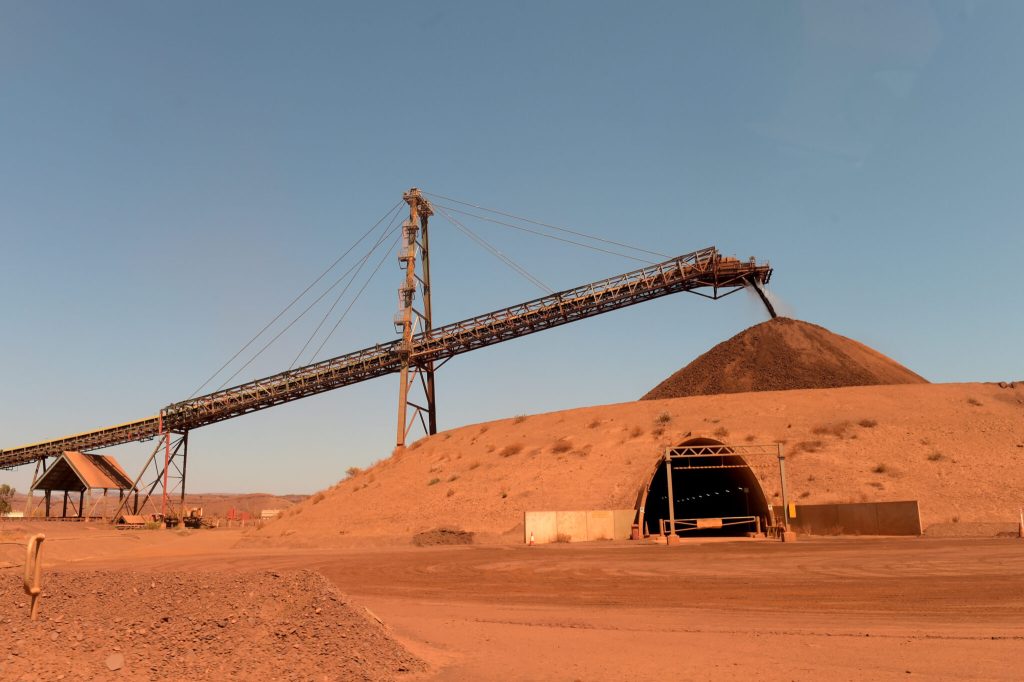
The iron ore market is experiencing a significant downturn, reaching its lowest point in over a year, driven by a combination of trader concerns and a challenging demand landscape. As investors and traders observe these developments, it becomes crucial to understand the underlying factors influencing this commodity’s pricing and how they may affect future market dynamics.
Recent trading activity revealed that iron ore futures fell sharply, dropping by as much as 2.3% to $93.65 a ton in Singapore, marking the steepest decline since early July 2025. In Dalian, one of the primary trading hubs for this essential steelmaking ingredient, the most actively traded contract saw a nearly 3% slide. These price movements have raised alarms, particularly due to emerging issues surrounding Radiant World, a private trader that has become a notable player in the sector.
Reports surfaced indicating that major industry players, such as Vitol Group and Cargill, have halted their transactions with Radiant World over allegations of fraudulent invoicing. This development has prompted financial institutions, including Intesa Sanpaolo SpA and Jefferies Financial Group’s Point Bonita fund, to reassess their exposure to the company. Despite these accusations, Radiant World has publicly refuted the claims, asserting that the allegations are entirely false.
The situation surrounding Radiant World has compounded an already delicate market, where iron ore prices were facing pressure due to weakening fundamentals in the steel industry. Recent data indicated that profit margins for Chinese steel mills have continued to dwindle, with hot-metal production experiencing a decline for the fourth consecutive week. Additionally, the construction sector in China has plummeted, reaching its lowest level since the onset of the pandemic, while factory activity contracted for the first time in five months during July.
Given these economic indicators, it is essential for traders to remain vigilant. Bancy Bai, an analyst at Horizon Insights, has noted that while there have not been any apparent irregularities in the spot market, the unfolding situation could lead to shifts in liquidity that warrant close monitoring. As benchmark futures for 61% content ore traded lower at $93.70 a ton, following three consecutive months of losses, traders must prepare for potential volatility in the market.
Key points to consider in this context include:
1. **Market Sensitivity**: The iron ore market is susceptible to both global economic indicators and specific trader dynamics. The recent accusations against Radiant World have highlighted how quickly investor sentiment can shift, impacting prices.
2. **Chinese Steel Industry**: With China being the largest consumer of iron ore, any signs of weakness in its construction and manufacturing sectors can significantly affect demand. The current downturn in mill margins and production levels is a key indicator that traders should heed.
3. **Fraudulent Activities**: The allegations against Radiant World emphasize the importance of due diligence in trading relationships. The impact of such claims can extend beyond individual companies, affecting market perceptions and liquidity.
4. **Monitoring Liquidity**: As the market reacts to the unfolding news, traders should be prepared to adjust their strategies. The possibility of liquidity shifts could create both risks and opportunities in the near term.
For traders and investors, this turbulent period in the iron ore market presents a mixed bag of challenges and potential opportunities. It is essential to remain informed and agile, ready to pivot strategies in response to ongoing developments. The current situation serves as a reminder of the interconnectedness of global markets and the importance of thorough research and analysis in navigating complex trading environments.
In conclusion, the decline in iron ore prices is a reflection of broader economic challenges, compounded by specific trader-related issues. As the market continues to evolve, staying updated on both macroeconomic trends and individual company news will be crucial for effective trading strategies. The situation with Radiant World, while currently a cause for concern, also underscores the importance of transparency and trust in trading relationships. Investors who can adeptly navigate these turbulent waters may find themselves well-positioned to capitalize on future market recoveries.