
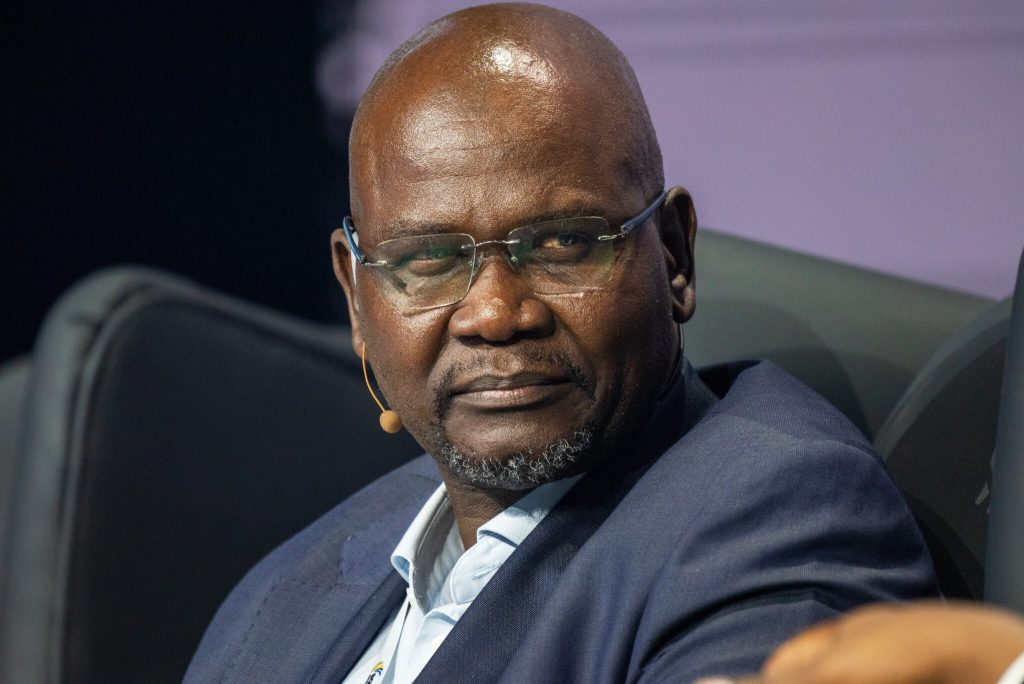
In a notable turn of events within South Africa’s financial landscape, Patrick Dlamini is set to reclaim his position as the chief executive officer of the Public Investment Corporation (PIC). This development follows a decisive ruling from the Gauteng High Court, which effectively annulled his recent suspension. The implications of this court decision extend beyond Dlamini himself, casting a spotlight on governance within one of the nation’s largest asset management firms and raising critical questions about institutional authority, oversight, and the future of the PIC.
The PIC, which manages assets totaling approximately R3.6 trillion, has been embroiled in controversy over the past few months. Dlamini’s suspension was rooted in allegations of misconduct brought to light by a whistleblower report earlier this year. However, the court’s judgment underscored a significant procedural misstep by the PIC Board, which had acted without the necessary authority to suspend the CEO. According to the ruling, the board’s unilateral decision violated established governance protocols that require ministerial consultation and adherence to internal policies.
The court’s assessment was clear: the PIC Board overstepped its bounds. The Public Investment Corporation Act stipulates that the finance minister, in consultation with the cabinet, is responsible for appointing the CEO, while the board’s role is limited to recommending candidates. Furthermore, any suspension must be initiated by the chair, recommended by the Human Resources and Remuneration Committee, and subsequently approved by the minister. The judgment noted that these critical steps were disregarded, rendering Dlamini’s suspension invalid.
The ramifications of this ruling are profound. For one, it highlights the systemic issues within the governance framework of the PIC. The situation escalated to a point where it caused significant rifts within the financial leadership of South Africa. Finance Minister Enoch Godongwana found himself at odds with Deputy Finance Minister David Masondo, the former chair of the PIC, as disagreements regarding the governance of the organization became evident. This discord ultimately led to the resignation of the entire board, which was replaced just days before the court’s ruling.
Key takeaways from this situation include the urgent need for clarity in governance structures within large public institutions. The recent upheaval at the PIC serves as a case study in the importance of adhering to established protocols to avoid legal challenges and maintain organizational integrity. Moreover, the ruling reinforces the necessity for robust whistleblower protections that do not inadvertently grant excessive power to governing bodies without proper checks and balances.
For traders and investors, this development may evoke a mix of caution and optimism. On one hand, the instability within the PIC could lead to uncertainty regarding asset management strategies, potentially affecting investment decisions. On the other hand, the court’s ruling may signal a commitment to accountability and governance reform within the organization, which could restore investor confidence over time. As the PIC moves forward under Dlamini’s leadership, stakeholders will be watching closely to see how the organization navigates these challenges and whether it can implement the necessary changes to prevent future governance crises.
In conclusion, Patrick Dlamini’s reinstatement as CEO of the Public Investment Corporation not only marks the end of a tumultuous chapter for him personally but also serves as a critical moment for the future of the PIC. The court ruling has illuminated significant governance deficiencies while also signaling a potential path toward reform and renewed trust in the institution. As the PIC embarks on this journey of recovery and accountability, its ability to adhere to governance protocols and foster a culture of transparency will be paramount. The financial community will be closely monitoring how this scenario unfolds, as the outcomes may have lasting implications for both the PIC and the broader South African economy.