
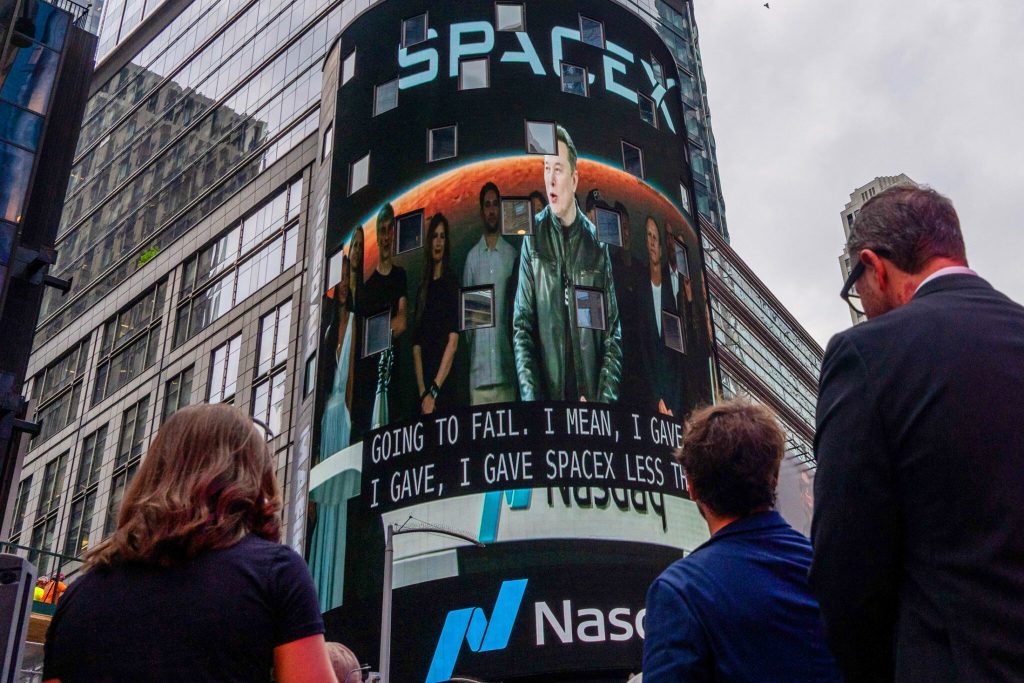
In the ever-evolving landscape of technology and space exploration, few companies have captured the imagination quite like SpaceX, led by the visionary Elon Musk. Recently, however, the company faced a significant setback when its stock took a notable dip following the announcement of increased expenditures in its artificial intelligence (AI) division. Despite posting stronger-than-anticipated quarterly results, concerns over rising costs have overshadowed the positive news, prompting investors and analysts to reassess the company’s trajectory.
SpaceX, the aerospace manufacturer and space transport services company, has been in the spotlight for its ambitious projects, including satellite internet through its Starlink network and innovative rocket technologies. The latest quarterly report revealed a staggering $18.4 billion in capital spending during the second quarter, significantly higher than what analysts had expected. This surge in expenditure has raised questions about the sustainability of SpaceX’s financial health and future profitability.
In the report, SpaceX showcased revenue of $7.8 billion, which exceeded the consensus estimate of $6.81 billion from Bloomberg analysts. Moreover, the company reported a loss of 9 cents per share, a more favorable outcome compared to the anticipated loss of 24 cents. Although these figures initially seemed promising, the substantial increase in operational costs has led to a 7% decline in stock value in after-hours trading, reflecting investor anxiety.
One of the key elements of SpaceX’s strategy is its plan to leverage the Starlink network to compete with major U.S. mobile carriers. Musk emphasized during a conference call with analysts that the cadence of AI development is expected to improve significantly. This confidence is rooted in his ambitious vision for the company, which includes a potential $100 billion annual revenue run rate by the end of the year—an assertion that has raised eyebrows among skeptics and supporters alike.
However, the reality of achieving such milestones is tempered by the challenges inherent in the ambitious projects that SpaceX undertakes. The development of the Starship rocket, a critical component in Musk’s plans for interplanetary travel and satellite deployment, has encountered numerous technical hurdles. The project has already absorbed approximately $15 billion in funding, and while a recent test flight showcased some success, the path forward remains fraught with risks.
As the market reacts to these developments, it’s important to consider several key takeaways. First, the volatility surrounding SpaceX’s stock reflects broader trends in the technology and artificial intelligence sectors, where investor sentiment can shift rapidly based on performance and future projections. Second, while SpaceX has demonstrated the ability to exceed revenue expectations, the high costs associated with its innovative endeavors raise valid concerns about long-term profitability.
For traders and investors, the recent decline in SpaceX’s stock serves as a reminder of the inherent risks involved in investing in high-growth technology companies. While there is potential for significant returns, especially given Musk’s track record of transforming industries, the volatility and unpredictability of such investments require careful consideration and risk management strategies.
Additionally, investors should remain aware that a significant amount of SpaceX stock—valued at over $100 billion—will soon become eligible for trading. This influx of available shares could exert additional downward pressure on stock prices, further complicating the investment landscape.
In conclusion, as SpaceX navigates its ambitious plans for the future, the balance between innovation and financial sustainability will be critical. While the company has the potential to redefine multiple industries, including telecommunications and space exploration, it faces significant hurdles that investors must weigh carefully. The recent stock decline serves as a wake-up call, underscoring the importance of thoroughly analyzing both the risks and rewards associated with investing in organizations on the cutting edge of technology. As Musk continues to push the envelope, stakeholders will need to remain vigilant and adaptive to the dynamic market conditions that lie ahead.