
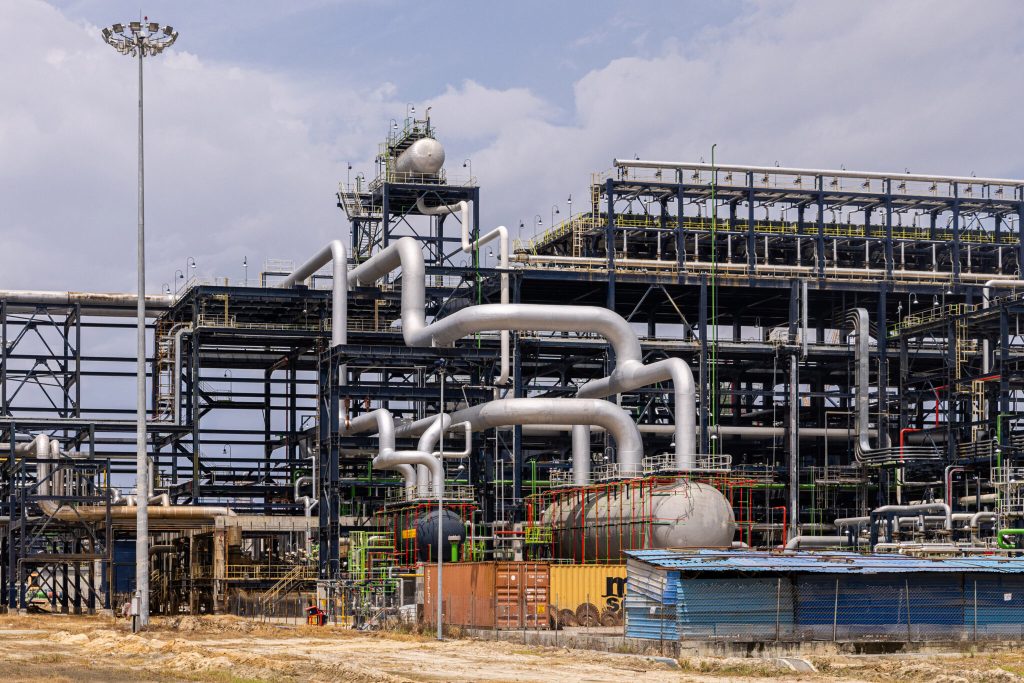
In recent weeks, the prospect of Dangote Petroleum’s initial public offering (IPO) has sparked considerable excitement in the financial markets, raising important questions about the future of investment in Africa. As discussions surrounding the potential listing evolve, many investors and analysts are keen to understand the implications of this significant move, not just for the company itself, but for the broader African economic landscape.
The news surrounding Dangote Petroleum’s IPO has been making waves, with initial speculations suggesting a listing on the London Stock Exchange. However, new insights indicate that Nigeria’s stock exchange could be the primary destination for this monumental IPO, with the possibility of secondary listings in countries like Kenya and South Africa. This shift highlights an important trend towards localizing investments within the African continent, which could have far-reaching consequences for both regional economies and global investors.
At the heart of this IPO is a valuation that could reach approximately $40 billion, based on recent private stake transactions. Early estimates suggest that the IPO could raise around $5 billion, a significant influx of capital that could redefine investment dynamics in Africa. But what does this mean for the continent? This potential IPO is not merely a financial event; it represents an opportunity for industrial growth and economic stability.
The significance of Dangote Petroleum’s IPO extends beyond its immediate financial implications. Craig Morkel, chairperson of the South African Oil and Gas Alliance’s Gas Economy Leadership Group, emphasizes that this IPO could serve as a barometer for investor confidence in Africa’s energy infrastructure. If successful, it could pave the way for increased foreign direct investment (FDI) and encourage local pension funds to participate in ventures that drive economic growth across the continent.
One of the most compelling arguments for supporting this IPO is the potential it has to strengthen Africa’s energy independence. With global supply chains facing disruptions due to various factors, including pandemics and geopolitical tensions, local production facilities like the Dangote refinery can play a crucial role in stabilizing supply chains. By localizing production, Africa can minimize risks associated with transportation costs and ensure a more reliable energy supply.
Investors should also consider the unique asset class that Dangote Petroleum represents. It is not just a refinery; it is a pivotal piece of infrastructure that could unlock a wealth of opportunities for investment in energy and other sectors. The successful realization of this IPO could demonstrate a robust commitment to industrial capability in Africa, positioning the continent as an emerging market ripe for investment.
From a trader’s perspective, the Dangote Petroleum IPO could signal a shift in how investment flows into Africa. The success of this venture could attract attention from global investors who have previously been hesitant to enter African markets. The implications of this could be profound, as it may stimulate interest in other large-scale projects across the continent, contributing to a broader industrial renaissance.
Moreover, Morkel notes that if Dangote Petroleum succeeds in its IPO, it could encourage other African enterprises to consider similar public offerings. This, in turn, could lead to a more vibrant stock market and a stronger economic framework for the continent. The potential for increased listings on local exchanges, such as the Johannesburg Stock Exchange, could also enhance the appeal of African markets to international investors.
In conclusion, the upcoming IPO of Dangote Petroleum is poised to be a landmark event not only for the company but also for the entire African continent. With an estimated valuation of $40 billion and the possibility of raising significant capital, this IPO is more than just a financial transaction; it represents a turning point in how Africa engages with the global economy. As the continent seeks to assert itself on the world stage, the successful launch of this IPO could provide the confidence needed to attract further investments and foster sustainable industrial growth. For investors, the implications are clear: the future of African markets is bright, and opportunities abound in this evolving landscape.