
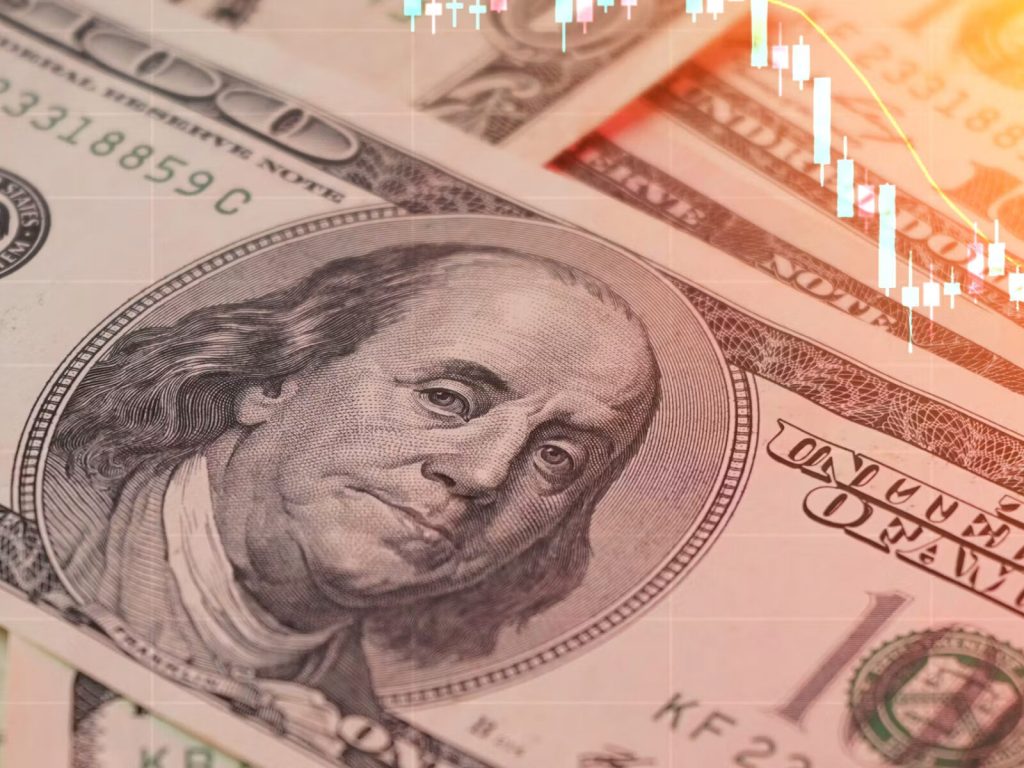
In the realm of international finance, the question of currency dominance is a recurring theme that reflects the shifting tides of global economic power. As discussions about the rise of China and its potential to surpass the United States as the world’s largest economy intensify, one cannot overlook the enduring supremacy of the US dollar. Barry Eichengreen, a distinguished economist and political scientist, delves into this intricate topic in his recent book, “Money Beyond Borders.” With a comprehensive exploration of historical and contemporary currencies, Eichengreen provides valuable insights into why the dollar continues to hold its ground despite emerging competition.
Eichengreen’s examination begins with a fascinating historical perspective on the evolution of international currencies. He traces the lineage of dominant currencies from the earliest coins, such as the Athenian “owls,” through to modern times. Each currency that has achieved global prominence shares common characteristics: they originate from politically stable, economically advanced nations that function as major hubs for international trade. This stability fosters confidence among traders and foreign investors, establishing a foundation for the currency’s widespread acceptance.
The Athenian owl, for instance, was a well-crafted coin that maintained its weight and design for centuries, reflecting the city-state’s commercial prowess. Similarly, the Roman denarius became a standard for trade across the vast reaches of the Roman Empire, while the Byzantine gold solidus facilitated transactions from Britain to India during its prime. Each of these currencies thrived in an environment of political stability and economic vitality, contributing to their acceptance worldwide.
As Eichengreen notes, the rise of the US dollar can be traced back to the establishment of the Federal Reserve in 1913, which bolstered the dollar’s credibility and reliability. This was further solidified after World War II at the Bretton Woods Conference in 1944, where Allied powers laid the groundwork for a new international financial system. By agreeing to a gold standard tied to the dollar, countries inadvertently reinforced the dollar’s position as the primary currency for global trade.
Today, the dominance of the dollar is evident in various metrics. Approximately 90% of transactions in the foreign exchange market involve the US dollar, and it constitutes the majority of international reserves held by central banks around the world. Furthermore, the dollar is utilized for invoicing around 40% of global trade. This preeminence enables the United States to wield significant influence over global economic dynamics, which is further complicated by the geopolitical landscape.
Key takeaways from Eichengreen’s work include the understanding that currency dominance is not merely a function of economic size but also of trust and stability. The historical context shows that each successful currency was backed by a robust economy and a reliable governance structure. As the global economic landscape evolves, emerging currencies may challenge the dollar’s supremacy, but they must first establish similar levels of trust and stability among international traders.
For traders and investors, the implications of this ongoing dominance are significant. While it may be tempting to speculate on shifts in currency power, the historical precedent suggests that such transitions are often gradual and fraught with complications. Investors should be aware of the dollar’s role as a safe haven during times of economic uncertainty, which can provide a buffer against volatility in emerging markets. It is also wise for investors to diversify their portfolios to mitigate risks associated with currency fluctuations.
In conclusion, Barry Eichengreen’s “Money Beyond Borders” offers a thorough examination of the historical evolution of international currencies, highlighting the factors that have contributed to the enduring dominance of the US dollar. As new economic powers rise, the dollar’s position may be challenged, but the lessons of history suggest that such transitions will require more than just economic growth; they necessitate a foundation of trust and stability. For traders and investors, understanding these dynamics is essential for navigating the complex landscape of global finance. The future of currency may be uncertain, but the lessons of the past remain clear: confidence, stability, and a robust economic framework are key ingredients for any currency aspiring to take the lead.