
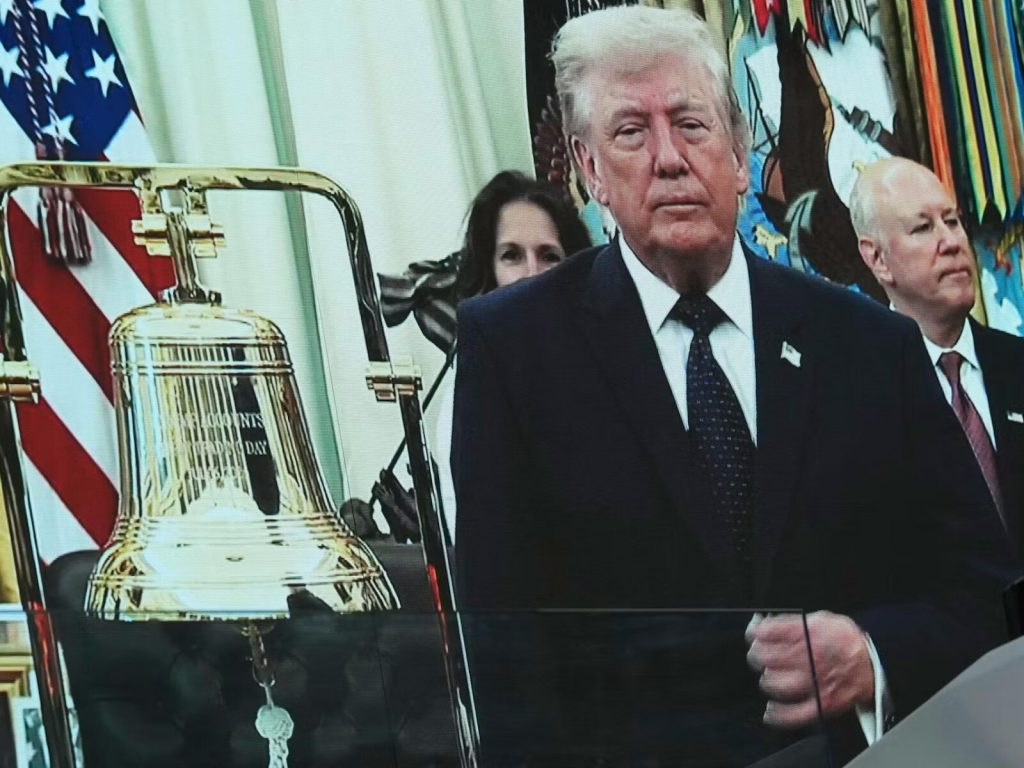
As we commemorate significant milestones in American history, the intersection of politics and personal finance becomes increasingly relevant, especially when examining the actions of President Donald Trump. In a move that has generated both intrigue and controversy, Trump hosted the first-ever professional sporting event at the White House in June, coinciding with the anticipation of the 250th anniversary of the Declaration of Independence. This event not only marked a unique occasion in the realm of presidential history but also raised questions about the relationship between political office and personal financial gain.
The UFC Freedom 250, an evening of mixed martial arts, was ostensibly part of the Independence Day celebrations. However, the event also served as a platform for Trump to promote his family’s business interests, particularly his connection to the cryptocurrency industry. Fighters received bonuses in $1 stablecoins, a digital currency associated with the Trump family, while the overall cost of the event was reported to be a staggering $60 million, a significant portion of which was funded by taxpayers. This situation has reignited discussions about the ethical implications of a sitting president profiting from their position.
The financial trajectory of Trump during his presidency has been a focal point since the release of his financial reports for the year 2025, revealing a remarkable revenue increase from $622 million in 2024 to an astounding $2.2 billion in 2025, marking the first year of his second term. While Trump and his family maintain that there is no conflict of interest, it is evident that his presidency has provided unique opportunities for financial advancement that are not commonly observed among his predecessors.
To understand the implications of Trump’s financial success while in office, it is essential to compare his situation with that of previous presidents. The Kennedy family, for instance, was historically affluent, with patriarch Joseph Kennedy establishing trusts for his children, allowing them to engage in public service without the burden of financial concerns. Lyndon B. Johnson, another notable figure, held substantial land and media assets, which were placed in a blind trust during his presidency to avoid conflicts of interest.
Richard Nixon, who was in office during a transformative era in American politics, saw modest financial growth of approximately $300,000 during his first term, primarily through real estate and his civil service pension. In contrast, Jimmy Carter’s path was fraught with challenges, as he entered the presidency with significant debts linked to his peanut farm business, ultimately leaving office in a state of financial distress.
Ronald Reagan’s background as a former actor gave him a unique perspective on wealth accumulation. While he entered office with around $4 million in assets—primarily real estate—these were also placed in trust to maintain a clear separation from his presidential duties. George W. Bush enjoyed a considerable financial windfall from the sale of his stake in the Texas Rangers, amounting to nearly $15 million, while serving as governor. Barack Obama and Bill Clinton have both achieved substantial wealth in the years following their presidencies, primarily through book deals and speaking engagements, appearing to prioritize financial ventures once out of office.
The stark contrast between Trump’s financial maneuvers and those of his predecessors highlights a fundamental shift in the relationship between the presidency and personal finance. Unlike previous leaders who generally refrained from leveraging their positions for financial gain while in office, Trump has adopted a different strategy. His approach raises important ethical questions regarding the extent to which a president can engage in business activities that intersect with their political responsibilities.
For investors and traders observing this landscape, there are several key takeaways. First, the unfolding dynamics of presidential finance can significantly influence market perceptions and investment strategies. The intertwining of politics and business creates a complex environment where decisions made by political leaders can have far-reaching effects on various industries, particularly in sectors like entertainment and cryptocurrency.
Furthermore, Trump’s unique approach to monetizing his presidency serves as a case study in the evolving nature of political capital. Investors should be aware of how shifts in political power and public sentiment can create opportunities and risks in the market.
In conclusion, the financial success of President Trump during his time in office is a testament to the changing landscape of the relationship between politics and personal wealth. As we witness this unprecedented melding of political and financial interests, it is crucial for both investors and the public to remain vigilant in understanding the implications of such actions. The ongoing evolution of this dynamic will undoubtedly shape the future of political leadership and its impact on economic landscapes for years to come.