
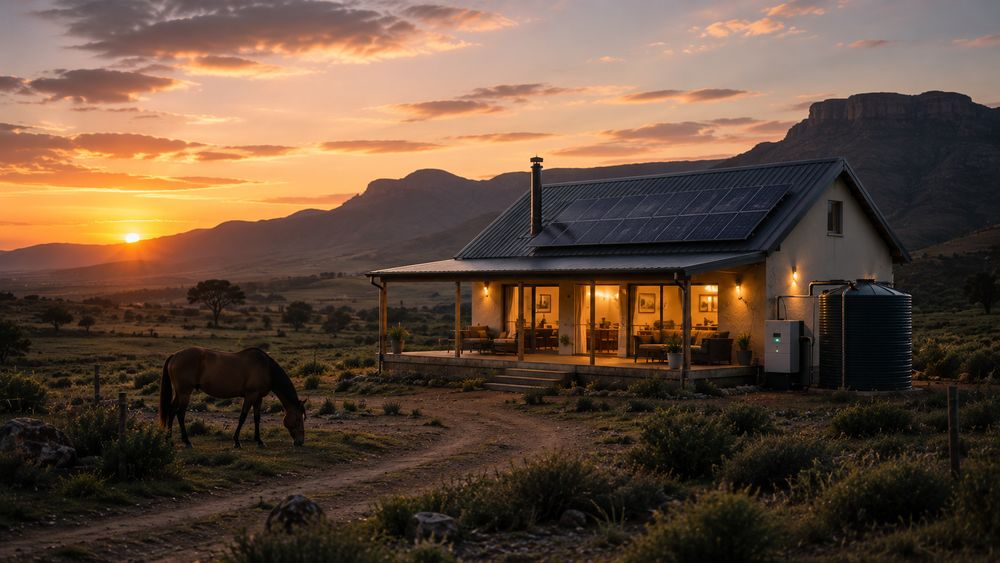
As homeowners increasingly seek independence from municipal utilities, the transition towards off-grid living has transformed from a mere trend into a practical necessity. With the rising costs of traditional energy and water services, many individuals are now prioritizing self-sufficiency to safeguard their homes against the uncertainties of municipal management. In this blog post, we will delve into the motivations behind this shift, the benefits of off-grid systems, and practical strategies for homeowners looking to enhance their sustainability.
The landscape of municipal services has drastically changed over the past decade. For many, the once reliable pillars of electricity and water supply have become sources of frustration and uncertainty due to frequent outages, price hikes, and deteriorating infrastructure. Recent reports from local government authorities highlight the challenges municipalities face, including poor financial management and governance failures, which have resulted in unreliable service delivery. This unsettling reality has prompted homeowners to rethink their dependency on these systems, leading to a surge in the adoption of renewable energy technologies and water conservation methods.
The desire for off-grid living is more than just a lifestyle choice; it is a proactive approach to risk management. Homeowners are investing in solar panels, battery storage, rainwater harvesting systems, and backup water supplies not simply to disengage from municipal services but to build resilience. The goal is to ensure that a burst water main, a power outage, or another round of price increases does not disrupt their daily lives. The appeal of self-sufficiency is evident as families seek to create a buffer against the unpredictability of municipal utilities.
However, a common misconception exists around the concept of going off-grid: many believe it requires significant investment in expensive technology. While advanced systems can enhance a home’s sustainability, the journey towards self-sufficiency often begins with a more fundamental principle—consuming less. By focusing on reducing overall demand for electricity and water, homeowners can achieve substantial savings before venturing into larger investments in renewable technologies.
For instance, a typical family home can benefit immensely from simple, cost-effective upgrades. Replacing incandescent light bulbs with energy-efficient LED bulbs, implementing smart geyser controllers, improving insulation, and upgrading to energy-efficient appliances are all strategies that can significantly lower energy consumption. These modifications often require a modest initial investment but can yield quick returns in terms of reduced utility bills. For example, the cost of replacing all light bulbs in an average home ranges from R1,000 to R3,000, while a smart geyser controller can be installed for approximately R2,000 to R6,000. Given that geysers alone can account for a substantial portion of electricity usage, these changes can lead to significant savings.
Water efficiency follows the same logic. Simple repairs, such as fixing a leaky toilet or installing low-flow faucets, can drastically reduce water wastage. Homeowners should assess their water usage patterns and identify areas where efficiency can be improved. This proactive approach not only minimizes costs but also contributes positively to the environment by reducing the overall demand on municipal water supply systems.
As individuals consider the shift to off-grid living, several key points emerge. First, it is essential to understand that going off-grid does not need to be an all-or-nothing endeavor. Homeowners can gradually implement changes and improvements that align with their budgets and lifestyle. Second, reducing demand is often the most effective first step in this journey. Lastly, investing in renewable energy systems, while beneficial, should be approached with careful planning and consideration of specific household needs.
For investors and traders in the renewable energy sector, this trend towards off-grid living opens up unique opportunities. As consumer demand for sustainable home solutions grows, businesses that provide innovative energy and water management technologies are likely to see increased interest and investment. Companies specializing in solar energy, energy-efficient appliances, and water conservation products stand to benefit from this shift in consumer behavior.
In conclusion, the move towards off-grid living is not just a response to the shortcomings of municipal services; it is a forward-thinking approach to home management and sustainability. By prioritizing efficiency and making informed decisions about energy and water consumption, homeowners can build resilience against the uncertainties of traditional utilities. As this trend continues to gain traction, it will reshape the landscape of homeownership and investment in the coming years. Embracing the journey towards self-sufficiency may very well be the key to a sustainable future for both homeowners and the environment.