
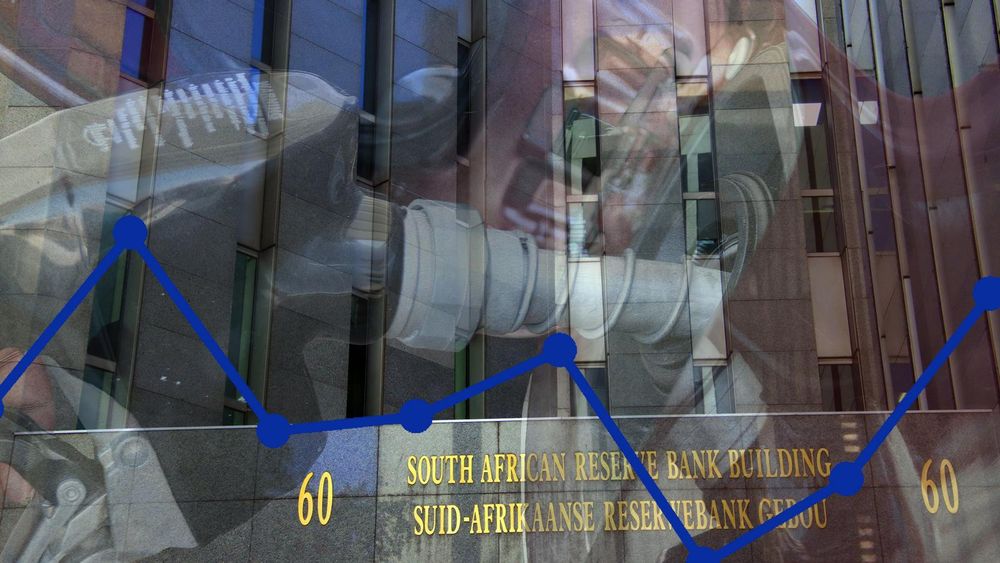
As the world grapples with fluctuating oil prices and geopolitical tensions, South Africa finds itself at a pivotal moment in its economic journey. With the South African Reserve Bank (SARB) set to meet next week, the anticipation surrounding the decision on interest rates is heightened, particularly in light of recent developments in the Middle East and their potential implications for inflation. Economists are closely monitoring these events, as they could significantly influence the Reserve Bank’s policy stance and, subsequently, the broader economic landscape.
The upcoming Monetary Policy Committee meeting is crucial, especially as the SARB has hinted at a cautious approach amidst rising oil prices. Recent reports indicate that oil prices have surged to approximately $85 per barrel, a level that raises concerns about its impact on inflation. This situation presents a complex challenge for policymakers, as they seek to balance the need for economic stability with the realities of external pressures.
In June, consumer inflation data is expected to show a slight increase from 4.5% in May to somewhere between 4.6% and 4.7%. Economists attribute this uptick primarily to the recent rise in fuel prices. However, some experts argue that this singular data point may not significantly sway the SARB’s decision-making process. Johann Els, chief economist at PSG, suggests that the central bank already formulated its inflation forecasts prior to the release of the latest consumer data. Despite the potential for increased inflation, he emphasizes that there is currently limited evidence to suggest that rising fuel costs are exerting substantial pressure on broader inflation levels.
Several factors contribute to this perspective. For one, wage settlements in South Africa have largely remained stable, and the rand has not experienced significant volatility. Moreover, the SARB’s proactive move to raise rates by 25 basis points in May has provided some buffer against further immediate increases. This preemptive action reflects the bank’s commitment to anchoring inflation closer to its target of 3%, which has become increasingly vital given the upward pressure from oil prices and other economic variables.
Investec’s chief economist, Annabel Bishop, echoes these sentiments, indicating that the geopolitical unrest in the Middle East has complicated the SARB’s decision-making process. While the bank has maintained a hawkish tone, indicating readiness to tighten policy if inflationary pressures persist, the overall economic environment remains nuanced. For instance, forecasts from Investec have revised expected inflation for 2026 to 3.7%, up from 3.3%, illustrating the evolving nature of these economic expectations.
The Bureau for Economic Research (BER) further supports the notion of a “hawkish hold,” suggesting that while higher inflation expectations and geopolitical uncertainties warrant a cautious approach, the underlying inflationary pressures remain manageable. They assert that there is little justification for immediate further tightening of interest rates at this juncture, especially as the SARB has already taken steps to address potential inflation risks.
As the Monetary Policy Committee prepares for its meeting, the implications of the upcoming inflation data release cannot be overstated. Although a single inflation reading typically would not heavily influence the committee’s decisions, the context surrounding this meeting is particularly delicate. A notable deviation in the inflation figures could have an outsized influence on the SARB’s policy direction, leading to potential adjustments based on unexpected economic shifts.
Currently, the repo rate stands at 10.5% following the rate increase in May, a critical benchmark for lending and borrowing across the economy. Experts predict that inflation may gradually ease throughout the remainder of the year, as the impact of rising fuel prices stabilizes and the economic landscape adjusts to current conditions. However, the path forward remains uncertain, and investors and traders must remain vigilant in monitoring these developments.
In conclusion, the SARB faces a challenging decision as it navigates the complexities of rising oil prices and their potential impact on inflation. While the consensus among economists leans towards maintaining current interest rates, the ever-changing economic landscape necessitates careful consideration of external factors. For investors and traders, staying informed about monetary policy shifts and inflation trends will be crucial in making strategic decisions in an environment marked by volatility and uncertainty. As we look ahead, the intersection of global oil dynamics and domestic economic policies will continue to play a significant role in shaping South Africa’s fiscal future.