
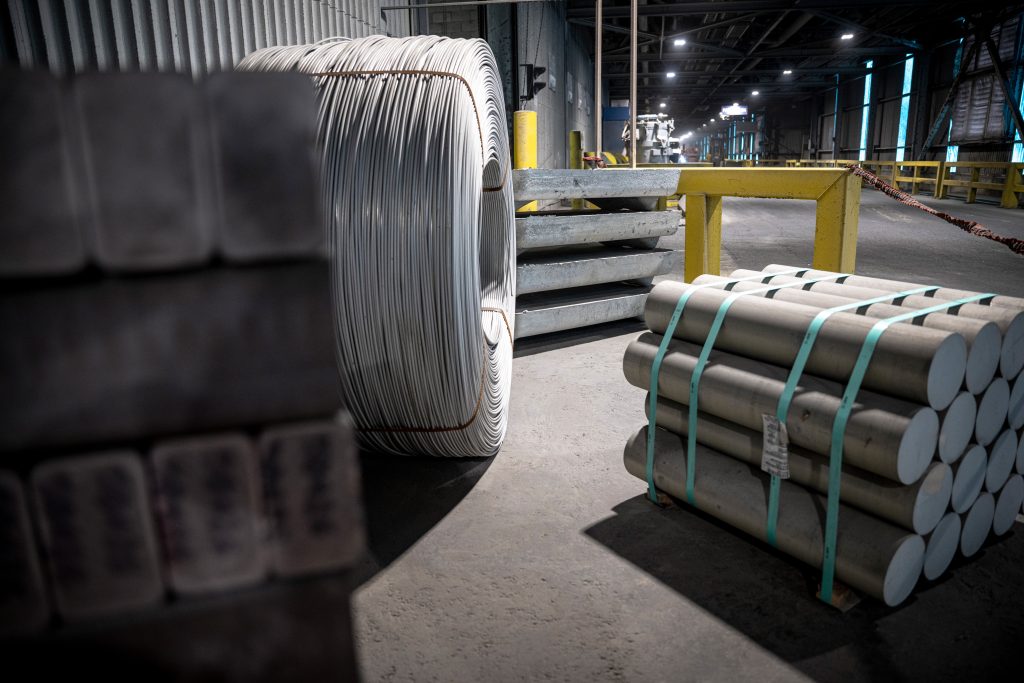
In a significant move to bolster the struggling aluminum industry, the Australian government has stepped in to provide a hefty financial package aimed at sustaining the operations of the Tomago aluminum smelter, the largest facility of its kind in Australia. This A$2.5 billion ($1.8 billion) bailout, shared between federal and state governments, comes as a lifeline for the smelter, which has been grappling with soaring energy costs that have plagued aluminum producers globally.
The Tomago smelter, located in New South Wales, is a critical player in the Australian aluminum market and has been operational for over four decades. The facility is a major consumer of electricity, accounting for more than 10% of the total energy usage in New South Wales, the nation’s most populous state. The financial support not only aims to keep the plant running but also represents a strategic investment in the country’s transition to renewable energy sources, highlighting the government’s commitment to sustainability amid rising operational costs.
The current situation for aluminum smelters is a challenging one, exacerbated by high electricity prices and stiff competition from more cost-effective operations in regions like China. For Rio Tinto Group, which owns a controlling stake in the Tomago facility, electricity expenses constitute over 40% of operational costs. The recent bailout agreement includes a commitment from Tomago Aluminium to invest A$1.1 billion and significantly reduce energy consumption during peak demand times, setting the stage for a more sustainable operational model.
One of the key aspects of this financial arrangement is the establishment of a new 10-year power-purchase agreement that will come into effect once the current power-supply contract expires at the end of 2028. This new deal will ensure that all energy used by the smelter will come from renewable sources by 2033, a move that promises to reduce the facility’s carbon emissions by approximately 7.1 million tons annually. Such a transition not only aligns with global sustainability goals but also positions Tomago as a leader in environmentally responsible aluminum production.
Prime Minister Anthony Albanese emphasized the importance of this initiative during a recent visit to the smelter, expressing his commitment to securing the plant’s future and ensuring that manufacturing remains a vital part of the local economy. This sentiment resonates throughout the Hunter region, where the smelter is located, as the facility provides significant employment and economic activity.
The financial support provided to Tomago is not an isolated incident; it reflects a broader trend of government intervention aimed at supporting energy-intensive industries in Australia. Earlier this year, Rio Tinto also received A$2 billion in combined federal and state funding for its Boyne smelter in Queensland. Furthermore, other companies such as Glencore and Trafigura have benefited from similar government support to maintain their operations.
For traders and investors, the implications of this bailout are significant. The government’s commitment to supporting the aluminum sector indicates a recognition of its strategic importance to the Australian economy. As the global demand for aluminum continues to rise, driven by sectors like automotive and construction, the ability of Australian smelters to compete effectively will hinge not only on operational efficiency but also on energy costs. The shift towards renewable energy is likely to enhance the long-term viability of these facilities while aligning with the increasing consumer and investor demand for sustainable practices.
In conclusion, the A$2.5 billion bailout for the Tomago aluminum smelter represents a critical intervention by the Australian government to sustain a vital industry amid rising energy costs and global competition. This financial support is not just about keeping the lights on; it signifies a strategic pivot towards renewable energy and sustainability, which will shape the future of aluminum production in Australia. For investors, the evolving landscape offers both challenges and opportunities as the sector adapts to new energy realities and environmental expectations. As the Tomago facility transitions to green energy, it may well serve as a model for other heavy industries facing similar challenges, ultimately contributing to a more sustainable economic future for Australia.