
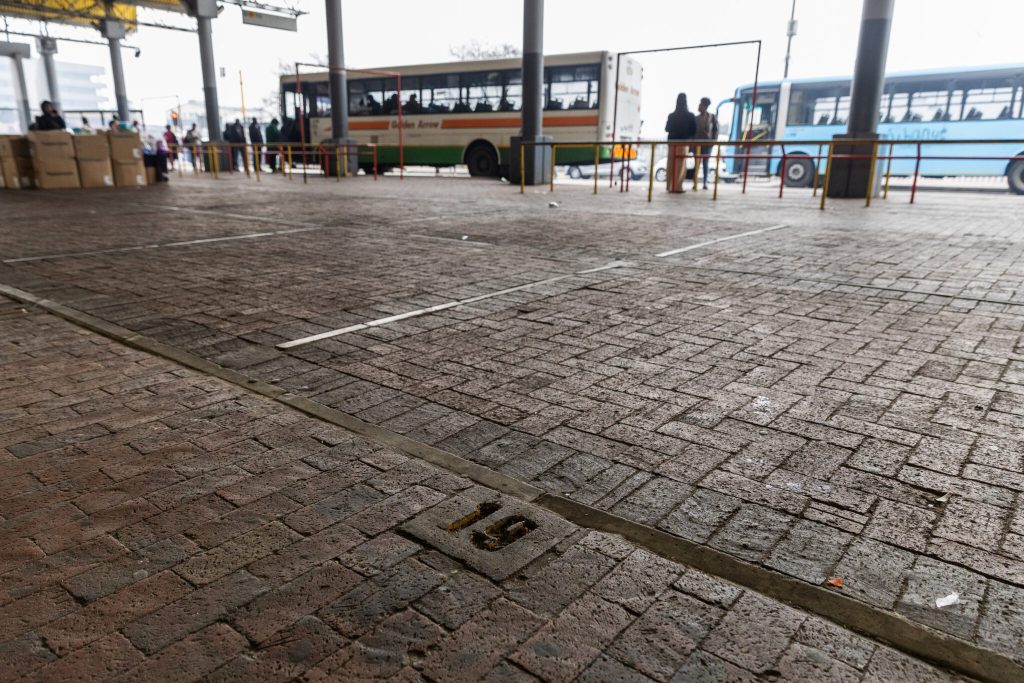
In recent months, the streets of Bellville, a bustling suburb of Cape Town, have transformed from vibrant marketplaces into quiet zones, largely due to anti-immigrant protests that have left many traders fearful of their livelihoods. The ongoing tensions highlight a significant intersection between local sentiment and economic activity in South Africa, raising questions about the implications for both immigrant traders and the broader economy.
The informal trading sector in South Africa has long been a critical component of the economy, providing jobs and services in areas where formal employment opportunities may be scarce. However, the recent rise in anti-immigrant sentiment has led to a notable decline in trading activities, particularly among foreign nationals who often rely on these informal markets for their survival. The situation at the Golden Arrow bus terminus in Bellville serves as a poignant example of this troubling trend, where the once-bustling environment now stands eerily quiet, with many stalls left unattended.
The protests, fueled by a call for the expulsion of “illegal immigrants,” have created an environment of fear and uncertainty. Many traders, who have established their livelihoods in South Africa, find themselves in a precarious position. A Zimbabwean trader, who has been selling clothes in Bellville for the past five years, expressed his concerns about the impact of these protests on his ability to provide for his family. He reminisced about leaving Zimbabwe during an economic collapse in 2008, only to face new challenges in his host country. While he has not personally experienced direct threats, he has witnessed the harassment of fellow traders, which only amplifies the atmosphere of fear.
Similarly, other traders, like Meye from the Democratic Republic of Congo, who has been legally permitted to trade since 2010, share their struggles in facing hostility despite their legal status. Meye’s story is not unique; many individuals in the informal trading sector are grappling with the same issues of discrimination and exclusion. As a single mother of three, her ability to support her children is increasingly jeopardized by the socio-political climate surrounding immigration in South Africa.
The situation is compounded for traders who possess valid refugee permits and trading licenses yet still face barricades when attempting to operate their businesses. Safia, a Somali trader, articulated the emotional toll of her circumstances, as she struggles to make ends meet for her family amidst the rising hostility. Her call for better protection from law enforcement reflects the desperate need for a solution that considers the rights and safety of all traders, regardless of their nationality.
Organizations such as the Somalia Association of South Africa are stepping in to offer support, helping traders navigate the challenges posed by the current environment. Abdulhakim Husein, the Western Cape director of the organization, noted that many asylum seekers and refugees rely heavily on informal trading as a means of self-employment. He highlighted a recent meeting where an agreement was reached to allow traders with valid permits to operate, but the announcement of impending protests soon overshadowed this progress, reigniting fears among traders.
The implications of these developments extend beyond individual traders. The informal trading community is crucial for the South African economy, especially in urban areas where formal employment opportunities are limited. A thriving informal sector not only provides jobs but also enhances the local economy by offering services and goods at competitive prices. However, when traders are forced to retreat due to fear, the economic fabric of these communities begins to unravel.
Key takeaways from this ongoing situation reflect the need for a balanced approach to immigration and economic policy. Addressing the root causes of anti-immigrant sentiments is essential. This includes fostering community dialogues that emphasize the contributions of immigrant traders and recognizing their role in local economies.
Investors and traders alike must remain vigilant in understanding the socio-economic dynamics at play. The success of local businesses often hinges on the stability and inclusivity of the market environment. For those invested in South Africa, supporting initiatives that protect and empower informal traders can lead to a more resilient and diverse marketplace.
In conclusion, the challenges faced by immigrant traders in South Africa underscore a larger narrative about the interplay of economic opportunity and social acceptance. As local communities grapple with questions of identity, belonging, and economic survival, the stories of these traders serve as a reminder of the resilience required to navigate adversity. Moving forward, fostering an inclusive environment that values the contributions of all individuals, regardless of their origin, is vital for sustaining the economic health of South Africa.