
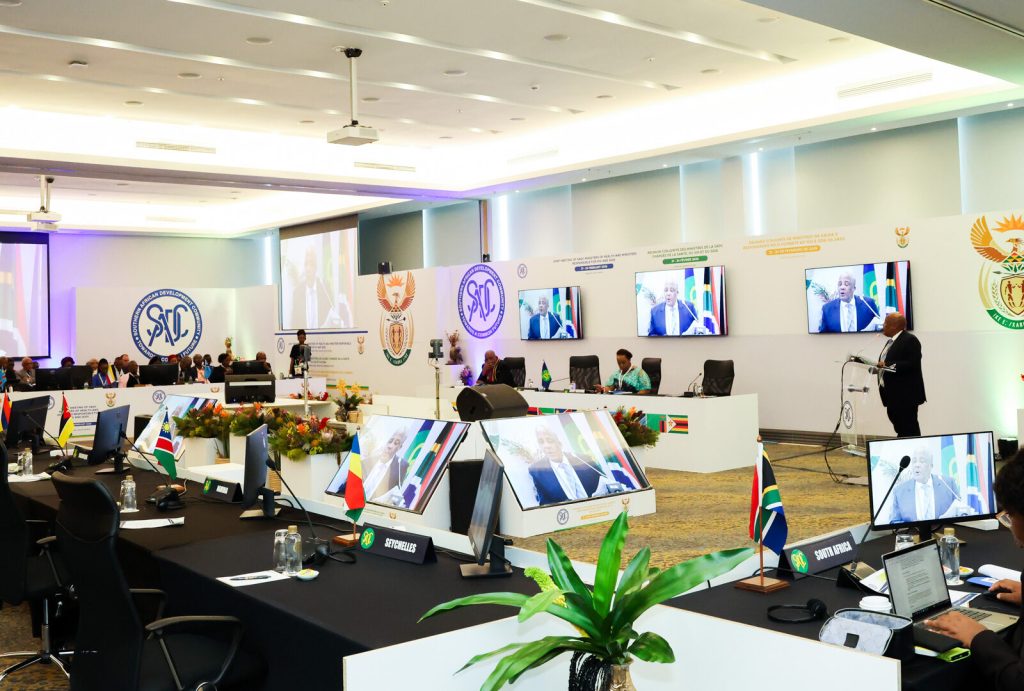
As South Africa steps into the leadership role of the Southern African Development Community (SADC), the nation faces an array of challenges that could shape the economic landscape of the region. With persistent trade barriers, a sluggish growth rate, and a decline in industrialization, the stakes are high for President Cyril Ramaphosa and his administration. This new chapter in SADC’s history demands not only a keen understanding of the region’s economic dynamics but also an innovative approach to enhance commerce and cooperation among the member states.
In recent months, South Africa has found itself at a crossroads, grappling with internal and external pressures that could affect its standing within the SADC. The recent protests against undocumented migrants in South Africa highlighted underlying social tensions, prompting the president to address these issues directly. Ramaphosa expressed concern over the treatment of foreign nationals, emphasizing that promoting regional integration cannot coexist with exclusionary practices. This sentiment resonates deeply, as economic collaboration and unity are essential for the stability and growth of the SADC bloc.
The SADC comprises 16 member countries, aiming to foster economic development through cooperative initiatives. However, according to the bloc’s latest State of the Region report, intra-regional trade remains disappointingly low, falling short of pre-pandemic levels. The report reveals that trade among member states has only increased to 20% as of 2025, reflecting systemic issues that continue to hinder economic progress. Key challenges include unresolved non-tariff barriers, ongoing trade disputes, and rising costs associated with cross-border commerce. These factors collectively stifle the potential for job creation and economic development within the region.
Despite these hurdles, there are glimmers of hope. The SADC’s overall growth rate improved to 3.4% last year, with projections suggesting a rise to 3.9% in 2026. However, Zimbabwe stands out as the only nation to achieve its ambitious growth target of 7% for 2025, while other member states are not expected to reach similar benchmarks this year. The manufacturing sector, which is crucial for economic advancement, has also seen a decline, contributing only 10.9% to the regional gross domestic product—far below the SADC’s goal of 30% by 2030.
The economic relationship between South Africa and its SADC neighbors is particularly noteworthy. As of 2024, South Africa exported $28.3 billion worth of goods to the SADC region, while imports amounted to $6.8 billion. This data underscores the significant role South Africa plays within the bloc, accounting for a staggering 91% of its intra-African exports. The country supplies essential industrial goods, machinery, food, and consumer products to its neighbors, creating a reliance that could either foster closer ties or exacerbate trade imbalances.
Another critical aspect of the economic landscape is the flow of remittances. Between 2016 and 2024, South Africa sent over R112 billion (approximately $6.9 billion) in remittances to SADC countries, with Lesotho, Zimbabwe, Mozambique, and Malawi being the primary recipients. In contrast, remittance inflows from these countries to South Africa were only R25.6 billion, revealing a significant disparity that highlights the economic challenges faced by neighboring nations. This situation presents an opportunity for South Africa to support regional economic development, potentially fostering an environment where trade can flourish.
Looking ahead, South Africa’s yearlong chairmanship of the SADC will prioritize several key initiatives aimed at addressing these economic challenges. The focus will be on promoting industrialization, strengthening regional value chains, and enhancing infrastructure development. One of the government’s goals is to increase the processing of critical minerals and agricultural products within the region, which could create jobs and stimulate economic growth.
The SADC’s Regional Development Fund will play a pivotal role in mobilizing capital for industrial projects and infrastructure development. By implementing a revised corporate plan for 2026-27, the bloc aims to create a more integrated economy that benefits all member states.
In conclusion, as South Africa embarks on its leadership journey within the SADC, the emphasis on regional cooperation and economic integration will be crucial. Addressing trade barriers, enhancing industrialization, and promoting fair practices will not only benefit South Africa but also uplift the entire Southern African region. This leadership transition presents a unique opportunity to reshape the economic future of SADC, paving the way for a more prosperous and interconnected community.