
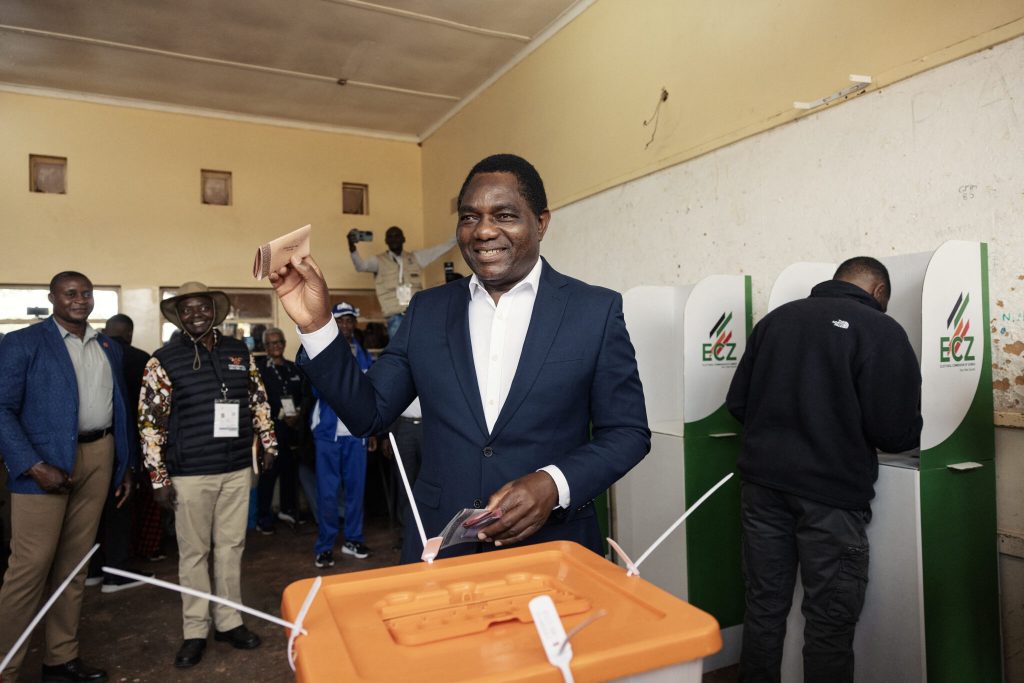
With the recent electoral victory of Hakainde Hichilema in Zambia, the nation stands at a crucial juncture that could shape its economic landscape for years to come. As the President of Zambia, Hichilema has been a beacon of hope for many investors keen on tapping into Africa’s second-largest copper producer. His re-election for a second five-year term signals continuity and a commitment to further economic reform, which is particularly important against the backdrop of a challenging financial environment.
In the recent elections held on August 13, Hichilema received approximately 60.5% of the votes, translating to around 2.97 million votes, outpacing his principal opponent, Brian Mundubile, who garnered about 1.86 million votes. The significance of this win cannot be overstated, especially as it comes at a time when Zambia is navigating the complexities of post-debt restructuring and economic stabilization. The electoral commission reported a voter turnout of 57.2%, a noticeable drop from the over 70% participation in the previous election cycle, highlighting growing discontent among the populace.
Hichilema’s administration has focused on addressing Zambia’s economic issues, particularly after a prolonged period of financial instability that involved a challenging debt-restructuring process. As he embarks on his new term, there is a palpable sense of optimism regarding his plans to foster economic growth and attract foreign investment. The President is aiming to solidify a new program with the International Monetary Fund (IMF) by the end of the year, which could provide critical support for Zambia’s economic agenda.
Investors and analysts have welcomed Hichilema’s victory, viewing it as a sign of continuity that could lead to accelerated economic reforms. Connor Vasey, a frontier markets director at Eurasia Group, noted that the second term is framed as an opportunity for greater positive change, which aligns with investor expectations. The continuity in leadership is likely to foster a stable investment climate, essential for attracting capital into Zambia’s mining sector and beyond.
Key points to consider include Hichilema’s ambitious vision to triple copper output to 3 million tons annually by 2031. Given that copper accounts for over 70% of Zambia’s export revenues, this initiative could significantly bolster the economy and improve the living standards of many Zambians. The government’s focus on enhancing infrastructure and mining capabilities is expected to play a pivotal role in this growth trajectory.
Nevertheless, Hichilema’s victory has not been without controversy. His challenger, Mundubile, has raised concerns about the electoral process, citing issues such as media bias and the uneven playing field that may have influenced the election’s outcome. The European Union Election Observation Mission reported constraints on democratic practices, which included restrictions on campaigning and the media’s overwhelming favoritism towards the ruling party. Such dynamics could pose challenges for Hichilema as he navigates governance in a divided political landscape.
From a trader or investor perspective, Hichilema’s re-election is a potential catalyst for investment opportunities in Zambia. The mining sector, particularly copper, is poised for growth, especially as global demand for copper increases in line with the transition to green technologies and renewable energy sources. Investors should keep a close eye on the government’s policy announcements and the outcomes of negotiations with the IMF, as these will provide insights into the economic direction of the country.
As Hichilema settles into his new term, the emphasis will be on creating a conducive environment for business and addressing the needs of the Zambian people, particularly in terms of rising living costs. The balance between economic reform and addressing social issues will be crucial for maintaining public support and ensuring long-term stability.
In conclusion, Hakainde Hichilema’s victory represents a pivotal moment for Zambia, with the potential to reshape its economic landscape. Investors should remain vigilant and engaged as Hichilema works to implement his vision for growth while navigating the complexities of governance in the face of public dissatisfaction. With a focus on increasing copper production and securing international financial support, Zambia could emerge as a key player in the African economic landscape under Hichilema’s leadership. The coming years will be critical in determining whether these ambitions translate into tangible benefits for both investors and the Zambian populace.