
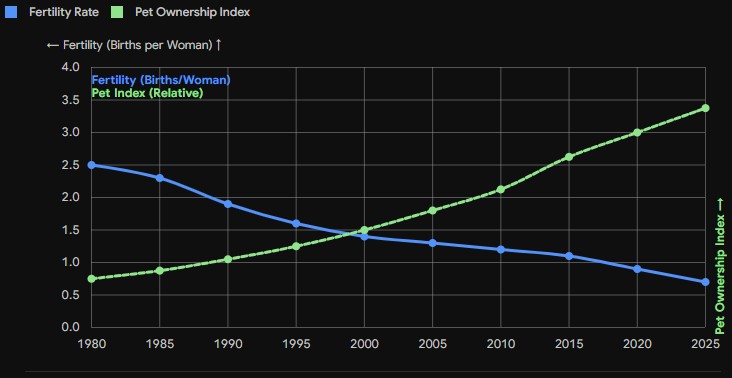
As society evolves, so do our relationships with pets. The global pet care industry is on an impressive growth trajectory, projected to expand at an annual rate of 6 to 7%, significantly outpacing the general economic growth of 3 to 5%. This burgeoning sector is not just a passing trend; it reflects deeper demographic shifts, particularly the growing tendency for individuals to adopt pets as family members. With fewer young people starting families and a rising population of older adults, pets are increasingly filling the void left by delayed parenthood. Understanding these trends can provide valuable insights for investors looking to navigate this lucrative market.
The rise of pet ownership is closely linked to changes in societal norms. As more people choose to marry later or forego parenthood altogether, pets are often seen as companions or “fur babies.” This shift in perception has led to a significant increase in pet adoption rates globally, with a particularly marked acceleration in regions like Asia where populations are aging rapidly. This phenomenon, often referred to as “pet humanization,” has transformed pets from mere animals into valued family members deserving of high-quality care, nutrition, and medical services.
With this change in attitude has come a notable increase in consumer spending on pet-related products and services. Much like parents invest in their children, pet owners are willing to spend more on their furry companions, resulting in a trend toward premium products and services. From gourmet pet food to specialized healthcare, the demand for higher-quality offerings is driving growth in the pet care sector. As consumers increasingly prioritize their pets’ health and well-being, the industry is evolving, incorporating more healthcare elements and premiumization strategies.
Despite its substantial growth potential, the pet care sector has faced some challenges in terms of market performance. For instance, the ProShares Pet Care ETF (PAWZ), which tracks the performance of the pet care industry, has lagged behind the broader S&P 500 Index. This underperformance can be attributed to several factors, including a lack of excitement surrounding pet care compared to high-tech industries like artificial intelligence, as well as potentially inflated valuations within the sector.
However, as the pet care market continues to grow, the valuations of various companies within the sector are becoming more attractive. Moreover, with a higher growth rate expected, it is anticipated that this will lead to improved returns for investors in the long run. The key takeaway here is that while the sector may have faced some hurdles, its fundamental growth story remains intact.
Investors looking to capitalize on the pet care boom have several avenues to explore. One of the most prominent players in the veterinary pharmaceuticals space is Zoetis Inc., which specializes in health products for both pets and livestock. However, investors should be cautious as the company’s patent portfolio is becoming increasingly commoditized, which could hinder its growth prospects.
Another interesting option is Idexx Laboratories, a company focused on veterinary diagnostic equipment and software. This niche offers a unique entry point into the pet care market, particularly as veterinary services become more sophisticated.
For those interested in consumer-facing companies, Chewy Inc. stands out as a major player, often referred to as the “Amazon of the pet food sector.” However, with Amazon itself now venturing into pet food delivery, Chewy’s competitive landscape is becoming more challenging.
A more strategic approach may involve investing in established, high-end pet care brands. Companies like Hill’s Pet Nutrition, owned by Colgate-Palmolive, are well-positioned to benefit from the dual trends of premiumization and healthcare demand. Colgate-Palmolive represents a clean entry point into the pet care market, with Hill’s brand offering products that cater to health-conscious pet owners.
In conclusion, the pet care industry is a vibrant and rapidly evolving sector that presents a wealth of opportunities for investors. As demographic trends continue to shift and the humanization of pets progresses, the likelihood of sustained growth in this market remains high. By carefully selecting investments in companies with strong brand recognition and a commitment to quality, investors can potentially reap the rewards of this burgeoning industry. With the right approach, the pet care market could prove to be not only a haven for pet lovers but also a lucrative field for astute investors.