
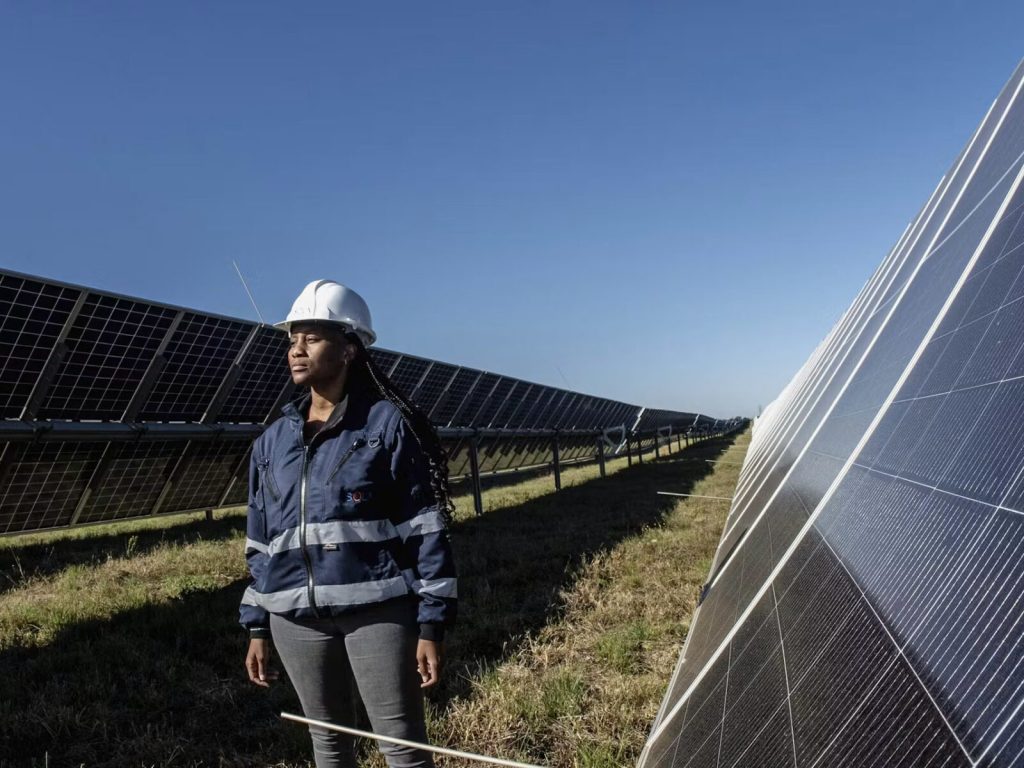
As South Africa faces the daunting challenge of transitioning from coal-fired power stations, the need for innovative and sustainable energy solutions has never been more critical. With coal still providing approximately 74% of the country’s electricity, the government is under pressure to replace this dwindling resource over the next two decades. While various renewable energy options exist, one promising technology that has been largely overlooked is concentrating solar power (CSP). This blog post will explore the advantages of CSP, the current energy landscape in South Africa, and the implications for traders and investors in the renewable energy sector.
In recent years, South Africa has made strides in diversifying its energy portfolio; however, the government’s national energy plan has not fully capitalized on the country’s exceptional conditions for CSP development. CSP harnesses direct normal irradiance, which refers to sunlight that travels directly from the sun without being scattered by clouds or atmospheric particles. Given South Africa’s predominantly dry climate and clear skies, the country boasts some of the highest levels of direct normal irradiance globally, second only to Chile’s Atacama Desert. Despite these favorable conditions, the government has scaled back ambitious plans for CSP development since 2014, with no new projects approved in recent years.
Currently, South Africa has several CSP plants in operation that were built by private companies as part of the renewable energy program. These plants collectively generate about 600 megawatts (MW) of electricity, enough to power approximately 350,000 to 400,000 average three-bedroom homes annually. However, the potential to expand this capacity remains largely untapped, and the reluctance to invest in CSP raises questions about the factors influencing energy policy decisions in the country.
One critical aspect of the ongoing debate surrounding CSP versus traditional solar panels is the comparative cost of each technology. On the surface, conventional solar panels appear to be more economical, with a price of around $35 (R576) per megawatt-hour (MWh) for daytime electricity generation. However, this perspective fails to take into account the limitations of photovoltaic (PV) systems, which cannot generate electricity at night. To address this shortcoming, batteries must be installed to store energy for nighttime use, raising the cost of nighttime electricity to approximately $166 (R2,735) per MWh.
In contrast, CSP systems can store thermal energy generated during the day and convert it into electricity after dark. The cost of CSP electricity averages around $95 (R1,565) per MWh, making it a more viable and reliable long-term solution for meeting the country’s energy demands, especially during peak consumption hours in the evening when demand surges.
In addition to CSP’s cost advantages, the government’s energy plan also places significant emphasis on nuclear power, with an investment of R2.2 trillion ($128 billion) allocated to this sector. While nuclear energy has its merits, the costs associated with it—approximately $140 (R2,312) per MWh—suggest that CSP could provide a more affordable and sustainable alternative for South Africa’s energy future.
Key takeaways from this analysis highlight the need for South Africa to reconsider its energy strategy by placing greater emphasis on CSP. The technology not only offers a cleaner energy source but also presents a more cost-effective solution for addressing the country’s growing electricity demands.
Traders and investors in the renewable energy market should closely monitor developments in CSP technology and policy, as the potential for growth in this sector is significant. The global shift toward sustainable energy solutions and the increasing demand for reliable electricity sources create an attractive landscape for those looking to invest in clean energy.
In conclusion, the future of South Africa’s energy landscape is at a crossroads. As the nation strives to phase out coal-fired power stations, CSP stands out as a promising alternative that capitalizes on the country’s natural resources. By embracing CSP technology, South Africa can not only enhance its energy security but also pave the way for a sustainable and economically viable energy future. It is essential for policymakers and stakeholders to recognize the potential of CSP and ensure that it plays a pivotal role in the country’s transition to renewable energy.