
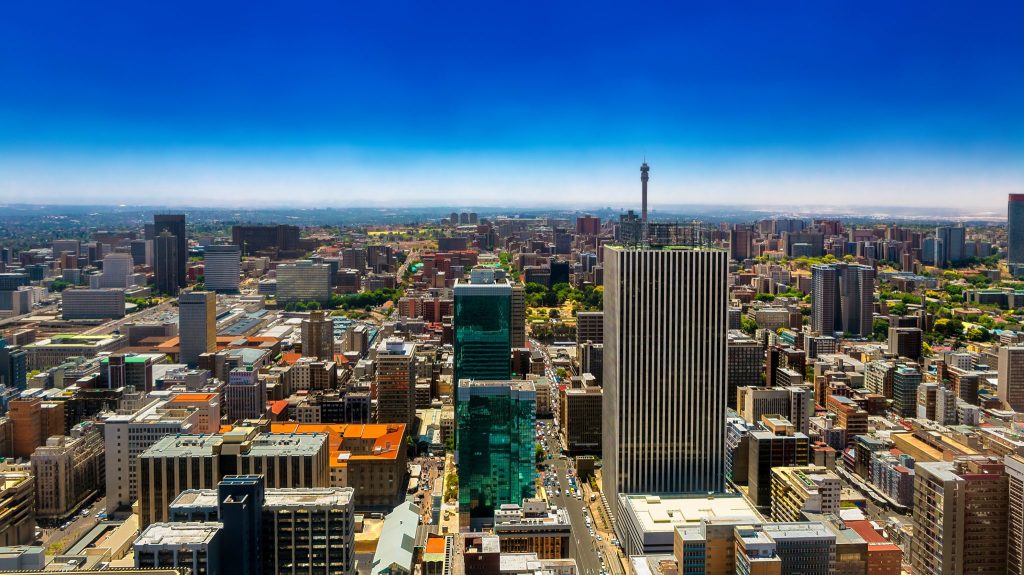
The City of Johannesburg, often hailed as South Africa’s economic heartbeat, is currently facing severe challenges that threaten its viability and, by extension, the nation’s economic stability. With infrastructure crumbling, rampant corruption, and a leadership vacuum, Johannesburg is entering a phase of crisis that could have far-reaching consequences for its residents and investors. This situation raises pressing questions about the city’s future and what it means for those who have a stake in its success.
Over the past decade, Johannesburg has been steadily deteriorating, and the acceleration of this decline over the last three years is alarming. The city is marred by thousands of potholes, a staggering 45% of the water pumped into the system is lost due to leaks and illegal connections, and nearly 30% of electricity is lost through theft and faulty meters. These issues are not merely inconveniences; they represent a systemic failure that could lead to economic collapse. Reports indicate that the city is on the brink of bankruptcy, with debts amounting to R25.2 billion against a meager cash reserve of R3.9 billion.
A recently published report by the Centre for Development and Enterprise (CDE) titled “Joburg in Jeopardy” underscores the gravity of the situation. The report argues that the failure of Johannesburg is not just a local issue; it poses a national risk. As the report states, “Preventing the collapse of Johannesburg must be a national priority.” The city is home to 70% of South Africa’s corporate head offices and accounts for 22% of the nation’s personal income tax revenue. A failure here would not just impact local residents but could destabilize the entire South African economy.
One of the most pressing concerns is the administrative chaos that has plagued the city. Obtaining a building permit, for instance, requires navigating 155 days and 20 steps—far more cumbersome and costly than the processes in other OECD countries. This inefficiency stifles investment and discourages new businesses from setting up shop in the city, exacerbating unemployment and economic stagnation.
Joburg’s current trajectory is disheartening. House prices have depreciated by an average of 2% over the past decade, a stark contrast to Cape Town, where property values have skyrocketed by 60%. This trend indicates not just a decline in real estate but also a decrease in quality of life for residents. Many affluent citizens have taken matters into their own hands by installing solar power systems and water tanks to mitigate the adverse effects of municipal failures. Unfortunately, the city’s response has been to raise tariffs, placing additional burdens on already struggling residents and businesses.
The discontent among the populace is palpable. Quality of life surveys reveal a growing frustration with the municipal government’s inability to provide basic services. Once a beacon of hope for job seekers, Johannesburg now boasts the highest unemployment rate among South African metros at a staggering 35.9%. This situation has raised a critical question: If Johannesburg is beyond repair, can South Africa itself hope for a brighter future?
The political landscape of Johannesburg has not helped either. Since 2016, the city has cycled through nine different mayors, with no leader managing to complete a full five-year term. This instability has resulted in a lack of coherent long-term planning, as policies and priorities shift with every new administration. The executive director of CDE, Ann Bernstein, captures the essence of the crisis by stating, “Johannesburg is the one municipality whose failure would make national success impossible.”
For investors, the situation presents both risks and opportunities. The volatility in Johannesburg may deter some, but for those who can navigate the complexities, there may be potential for substantial gains. Investing in infrastructure projects, renewable energy, and water conservation initiatives could be ways to not only profit but also contribute to the city’s recovery efforts.
In conclusion, Johannesburg stands at a crossroads. The crisis affecting the city is not merely a local issue but a national concern that could reshape the economic landscape of South Africa. With leadership failures, rampant inefficiencies, and increasing discontent among residents, the time for decisive action is now. Whether through political reform, strategic investment, or active civic engagement, stakeholders at all levels must come together to avert a disaster that could have lasting repercussions. Only through collective effort can Johannesburg reclaim its status as a thriving metropolis and regain its place as a cornerstone of South Africa’s economy.