
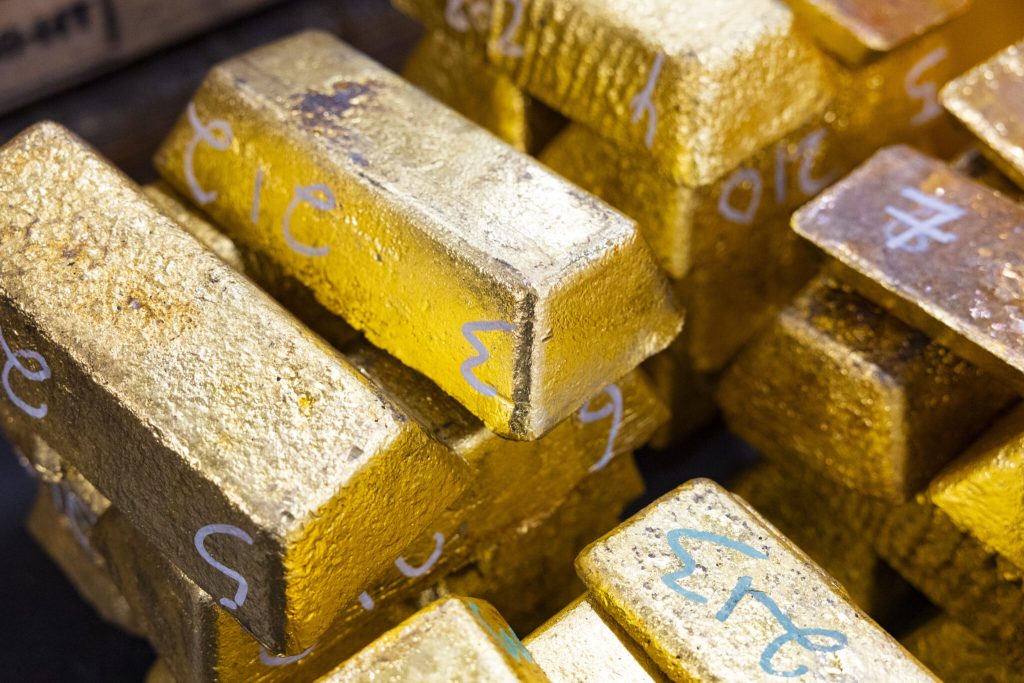
In recent weeks, gold has become a focal point for investors as its price performance has captured the market’s attention. After experiencing a significant surge, the precious metal’s value has been bolstered by unexpected actions from the U.S. Treasury Department aimed at controlling long-term borrowing costs. With its price hovering around $4,500 an ounce, gold is not only a safe haven asset but also a potential beneficiary of shifting economic conditions. This post will explore the recent developments in the gold market, the implications of U.S. Treasury’s strategies, and what this means for traders and investors.
The recent surge in gold prices can be largely attributed to a surprising announcement from the U.S. Treasury Department. In an unexpected move, the department revealed plans to increase buybacks of long-dated government debt. This initiative aims to lower the borrowing costs that have surged to multi-decade highs, thereby making gold a more attractive investment option. Since gold does not yield any interest, a decline in borrowing costs can enhance its appeal, as investors seek alternatives to interest-bearing assets.
The Treasury’s announcement included a commitment to double the size of liquidity support buyback operations for securities maturing between ten and thirty years. This decision not only signals a proactive approach to stabilizing the Treasury market but also hints at broader financial conditions that may become more favorable for precious metals like gold. However, this optimistic outlook comes with caveats, especially in light of a recent disclosure that U.S. public debt has exceeded $40 trillion for the first time.
While the Treasury’s actions may provide a temporary boost for gold, it’s essential to consider the broader economic landscape. Experts warn that the path for gold’s price movement may not be straightforward. Christopher Wong, a strategist at Oversea-Chinese Banking Corp, noted that the sustainability of gold’s upward trajectory heavily relies on the persistence of declining yields and the extent of inflows into exchange-traded funds (ETFs) that hold gold. Additionally, rising inflation, particularly driven by energy prices, poses a potential headwind for gold, as investors may react to higher interest rates.
As geopolitical tensions continue to simmer, particularly in the Middle East, the oil market has also shown resilience. Factors such as the ongoing conflict between the United States and Iran over the Strait of Hormuz have contributed to energy price fluctuations, which can indirectly affect inflation and, consequently, gold prices. A recent spat between the United Arab Emirates and Iran further complicates the situation, creating an environment of uncertainty that often drives investors towards gold as a safe haven.
Recent minutes from the Federal Reserve’s July meeting revealed that a greater number of officials supported raising interest rates in response to persistent inflation concerns. Higher interest rates typically have a negative impact on gold prices, as they increase the opportunity cost of holding non-yielding assets. Despite these challenges, gold has managed to maintain its position above the critical support level of $4,000 an ounce, with increasing buying interest observed among investors looking to capitalize on any dips in price.
As of the latest market updates, spot gold saw a slight decline to approximately $4,495.89 an ounce, while silver and other precious metals also experienced minor setbacks. The Bloomberg Dollar Spot Index, which measures the strength of the U.S. dollar, showed marginal gains, reflecting the ongoing fluctuations in currency values that impact commodities like gold.
For traders and investors, the key takeaway from the current market dynamics is the importance of staying informed about macroeconomic indicators and geopolitical developments. Understanding the relationship between interest rates, public debt, and inflation can provide valuable insights into potential price movements for gold and other precious metals. Given the volatility in market conditions, having a diversified investment strategy that includes precious metals can be a prudent approach.
In conclusion, gold’s recent performance illustrates its resilience amid shifting economic policies and geopolitical tensions. While the U.S. Treasury’s initiatives may provide temporary support for the precious metal, investors must remain vigilant and adaptable to changing conditions. By keeping a close eye on interest rates, inflation trends, and market sentiment, traders can better navigate the complexities of the gold market and position themselves for potential opportunities. As always, informed decision-making will be crucial in capitalizing on the evolving landscape of precious metals investing.