
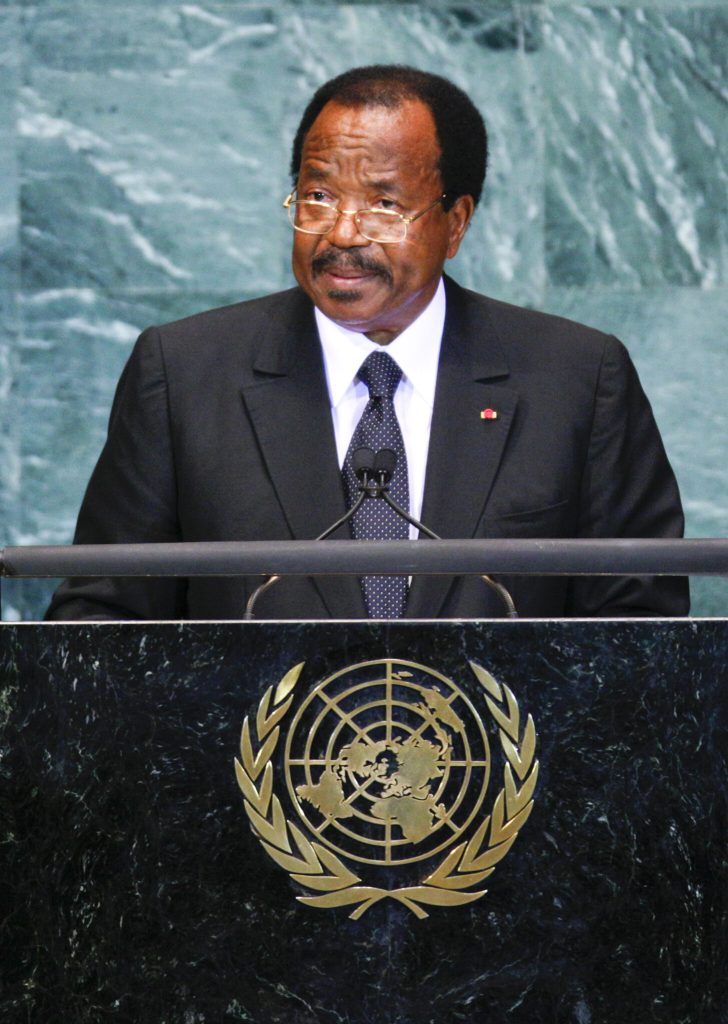
In the heart of Central Africa lies Cameroon, a nation grappling with a significant political and financial turning point. Recently, the country has been the focal point of international attention as its long-standing president, Paul Biya, returned home after an extended stay in Switzerland. This episode not only highlights the complexities of leadership in Cameroon but also raises crucial questions about the future of governance and investment in a nation where stability is paramount.
Paul Biya, who has held the presidency since 1982, is recognized as one of the world’s longest-serving leaders. At 93 years old, his recent 74-day absence abroad is noteworthy, primarily due to the speculation surrounding his health and the implications for his leadership. Historically, Biya has sought medical treatment in Switzerland, a pattern that has now become a focal point for investors and political analysts alike. His long absence has stirred unease among international bond investors, particularly concerning the future political landscape of Cameroon.
The financial ramifications of Biya’s health and absence are evident in the bond market. On July 31, the yield on Cameroon’s 2033 eurobond surged to 9.8%, the highest it has been in over three months, before slightly retracting to 9.4%. This fluctuation indicates a growing concern among investors regarding the potential instability that could arise from an unclear succession plan. The lack of a defined strategy for leadership transition in the event of Biya’s incapacitation or death has led to fears of a power struggle, which could further destabilize the nation’s political and economic environment.
One of the key developments during Biya’s administration has been the recent constitutional amendment aimed at reintroducing the vice presidency. This position could theoretically facilitate a smoother transition of power should the need arise. Despite this, the absence of a designated vice president remains a critical gap in Cameroon’s governance structure. Without a clear successor, the potential for conflict increases, which could have serious repercussions for both domestic stability and foreign investment.
For investors, understanding the political landscape is as crucial as analyzing financial metrics. The uncertainty surrounding Biya’s health and the future of his administration can lead to volatile market conditions. Investors should monitor developments closely, particularly any announcements regarding the vice presidency or other significant political changes. The situation underscores the need for a comprehensive risk assessment when considering investments in regions marked by political instability.
Key points for investors to consider include:
1. **Political Stability**: The uncertainty regarding leadership can impact investor confidence. A clear succession plan is essential to ensure stability in governance.
2. **Economic Indicators**: The fluctuation in bond yields serves as a barometer for investor sentiment. Continual monitoring of these indicators can provide insights into market reactions to political events.
3. **Regional Implications**: The political situation in Cameroon does not exist in isolation. Changes in leadership could influence regional dynamics, affecting trade, security, and economic partnerships.
4. **Long-term Outlook**: While short-term volatility may present challenges, long-term investors should assess the underlying economic fundamentals of Cameroon and its potential for growth despite political uncertainties.
As the political landscape in Cameroon evolves, the implications for both the nation and its investors are profound. With the recent return of President Biya, the immediate focus may shift back to governance and stability. However, the underlying concerns about succession and political continuity remain.
In conclusion, Cameroon stands at a crossroads, where the longevity of its leadership is inextricably linked to the country’s economic outlook. For investors, navigating this complex environment requires not just a keen understanding of financial data but also a comprehensive grasp of the political dynamics at play. As the nation moves forward, the need for a transparent succession plan is vital to ensuring both political stability and economic growth, which can ultimately restore investor confidence in this pivotal African economy.