
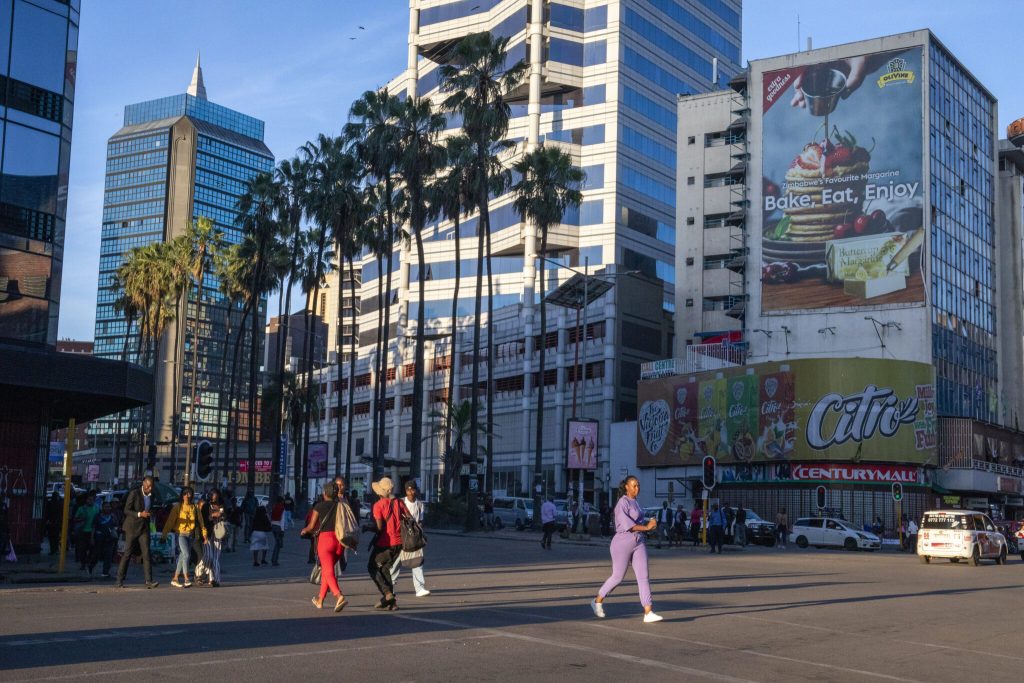
Zimbabwe has recently made headlines by announcing significant strides towards achieving its economic objectives under a framework established with the International Monetary Fund (IMF). The country is attempting to navigate its way back into international credit markets after being sidelined for over two decades following a series of economic missteps. With a renewed commitment to fiscal discipline and structural reforms, Zimbabwe’s prospects for recovery appear to be gaining momentum.
As Innocent Matshe, the deputy governor of the Reserve Bank of Zimbabwe, articulated, the nation has successfully adhered to the quantitative targets set forth in the IMF’s Staff Monitored Program (SMP). This informal agreement, which does not involve any financial aid, serves as a critical stepping stone for Zimbabwe to regain its footing in the global financial landscape. By reinstating stability and credibility in its economic policies, Zimbabwe aims to attract foreign investment and reestablish relationships with international lenders.
The journey towards economic recovery for Zimbabwe is fraught with challenges, but the commitment shown by the government and the Reserve Bank is noteworthy. The SMP, which commenced in April, is designed to enhance transparency and accountability in economic governance. Passing the first review of the program in July marked a significant milestone, hinting at the government’s seriousness in adhering to the prescribed reforms.
One of the essential factors in this recovery process is the emphasis on price and exchange rate stability. Matshe underscored that maintaining these elements is vital for fostering an environment conducive to economic growth. The commitment to a stable macroeconomic framework signals to potential investors that Zimbabwe is serious about creating a predictable financial landscape, which is crucial for attracting foreign capital.
The IMF is expected to conduct its final assessment of the SMP in September, and the results will play a pivotal role in determining Zimbabwe’s future economic trajectory. The last engagement with the IMF was in 2019, which resulted in the program being abandoned due to non-compliance with its recommendations. However, the current administration seems more focused on adhering to the necessary reforms, indicating a shift in strategy and governance.
As part of its broader economic reforms, Zimbabwe introduced a gold-backed currency called the ZiG in 2024, representing a significant step towards diversifying its monetary system. Despite the US dollar remaining the predominant currency for daily transactions, the government aims to gradually promote the ZiG as its sole legal tender. However, Matshe indicated that this transition would be a market-driven process, highlighting the complexities of shifting currency dynamics in a country with a tumultuous economic history.
For investors and traders, Zimbabwe’s evolving economic landscape presents both opportunities and risks. The government’s commitment to reform and stabilization could lead to a resurgence of investor confidence, attracting capital inflows that have been absent for many years. This could eventually translate into higher stock valuations and investment returns. However, caution is warranted given the historical context of economic mismanagement and the inherent volatility of emerging markets.
Key takeaways from Zimbabwe’s current economic situation include:
1. Commitment to Reform: The government’s adherence to the IMF’s SMP marks a critical step towards restoring credibility in its economic policies.
2. Currency Transition: The introduction of the ZiG represents an innovative approach to stabilizing the economy, although its success will depend on market acceptance.
3. Investor Confidence: A stable macroeconomic environment could rekindle foreign interest in Zimbabwe, but investors must remain vigilant.
4. Historical Context: Past failures in adhering to IMF guidelines remind us of the potential risks associated with investments in Zimbabwe.
In conclusion, Zimbabwe stands at a crossroads in its economic recovery journey. The commitment to meeting IMF objectives signals a renewed focus on fiscal discipline and economic stabilization. While opportunities may lie ahead for investors, the path remains fraught with challenges. Continued reforms and a transparent approach to governance will be essential for building lasting investor confidence and securing a stable economic future for Zimbabwe. As the country embarks on this new chapter, all eyes will be on its ability to sustain momentum and navigate the complexities of its economic landscape.