
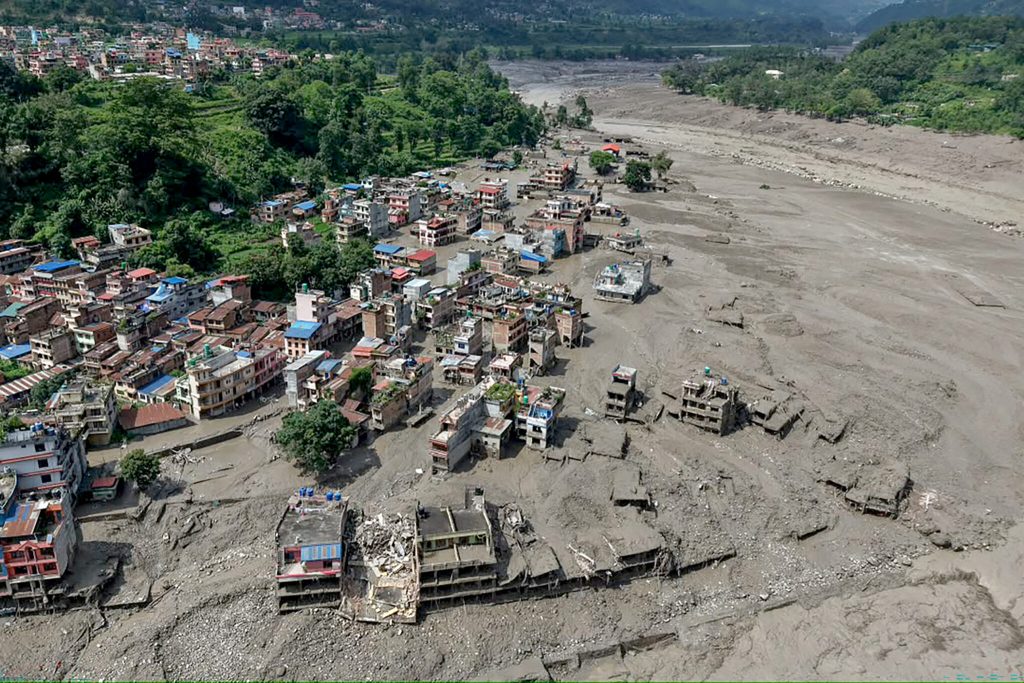
In recent days, the world has witnessed a heart-wrenching disaster unfold in Nepal, where a severe flash flood has claimed the lives of at least 165 individuals, leaving hundreds missing and prompting widespread evacuations. As the country grapples with the aftermath of this calamity, it is essential to explore not only the immediate impact of such natural disasters but also the broader implications of climate change that are exacerbating these events. This blog post delves into the details of the situation, the response from neighboring countries, and the ongoing risks posed by climate-related phenomena.
On the fateful day of the disaster, a sudden deluge swept through a valley in Nepal’s Rasuwa district, near the border with China, triggering a catastrophic mudslide. The U.S. Geological Survey attributed the flooding to a “glacial collapse and debris flow,” a phenomenon that has become increasingly common in the region due to rising global temperatures. This incident serves as a stark reminder of the fragility of mountainous terrains and the devastating consequences that can arise from shifts in climate patterns.
The scale of destruction has been staggering. Reports indicate that nearly 300 foreign nationals, including tourists from India, Malaysia, the United Kingdom, the United States, and Australia, are currently unaccounted for. Among the missing are 30 Bengali tourists who were on a pilgrimage, alongside their guides. As rescue operations commenced, the challenges posed by the terrain and adverse weather conditions quickly became apparent. Efforts to deploy helicopters for search and rescue have been hampered, and local teams are struggling to navigate the devastation that has left roads and bridges obliterated.
The impact of the flooding extends beyond human tragedy. Nepal’s Disaster Risk Reduction and Management Authority reported that approximately 80 bridges and 40 kilometers of paved highways have been damaged or completely washed away. This destruction not only poses immediate threats to safety but also disrupts transportation and access to essential services in the region. The Indian states of Bihar and Uttar Pradesh have declared a state of high alert, with evacuations underway in vulnerable areas, showcasing the cross-border ramifications of such disasters.
As the situation unfolds, it is crucial to highlight the systemic issues that contribute to the increasing frequency and severity of such disasters. Climate change, driven by human activities, has resulted in glacial melting and extreme weather patterns, leading to more severe rainfall events and subsequent flooding. Experts, including Ruth Gamble, a historian specializing in Tibet, have noted that landslides are becoming more frequent and larger, presenting unprecedented challenges for response and recovery efforts in regions like Nepal.
Key takeaways from this disaster include the urgent need for improved disaster preparedness and response strategies, particularly in vulnerable areas prone to natural calamities. Governments and organizations must enhance infrastructure resilience and invest in early warning systems to mitigate the impact of future events. Furthermore, global cooperation is vital in addressing climate change, as its effects are not constrained by national borders.
For traders and investors, the implications of such disasters can be profound. The immediate human and economic toll can lead to disruptions in local economies, affecting markets and supply chains. Companies operating in regions susceptible to natural disasters must assess their risk exposure and consider strategies to reinforce their operations against climate-related threats. Additionally, sectors such as insurance may see increased claims, prompting a reevaluation of risk models and coverage options.
In conclusion, the recent flash flood in Nepal is a tragic illustration of the urgent need to confront the realities of climate change and its far-reaching impacts. As the nation mourns the lives lost and grapples with the aftermath, it is imperative for governments, businesses, and communities to work collaboratively in building resilience against future disasters. The time for action is now, as the frequency and intensity of climate-related events continue to escalate, posing existential threats to vulnerable regions worldwide.