
In recent weeks, the border region between Nepal and China has been gripped by a catastrophic flood crisis that has not only claimed hundreds of lives but has also raised alarm about the stability of a large dam created by debris-clogged rivers. This situation serves as a stark reminder of the precarious balance between natural disasters and human safety, particularly in remote and mountainous areas. As rescue operations continue amid the chaos, the implications of this disaster extend beyond immediate rescue efforts and delve into broader discussions about disaster preparedness and risk management in vulnerable regions.
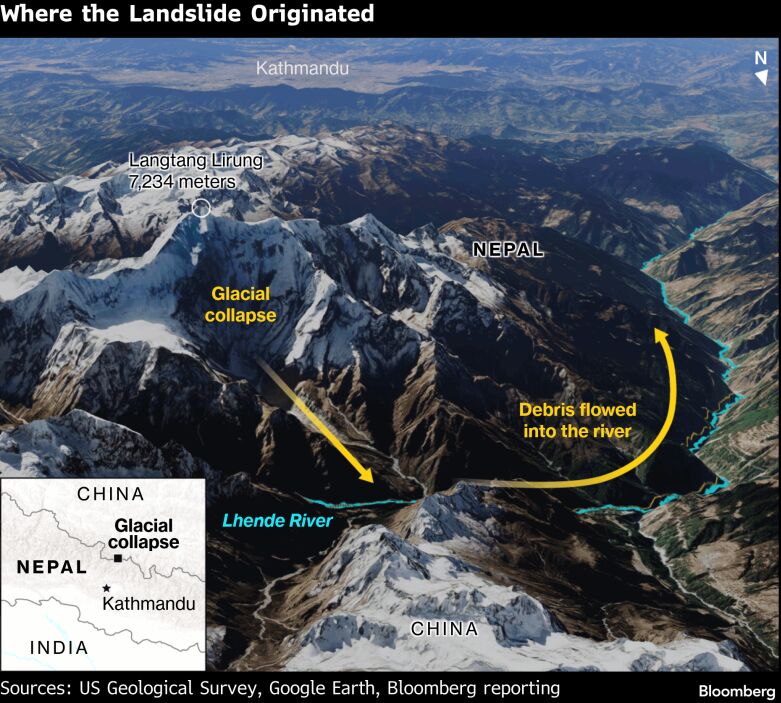
The recent floods in the Himalayas have been nothing short of devastating. Following heavy rainfall, rivers became blocked with rocks, ice, and mud, leading to the creation of unstable lakes high in the mountains. Reports of a dam bursting on the Tibetan side of the border quickly escalated fears among local authorities, prompting urgent warnings for residents and rescue workers to seek safety. While initial claims regarding the dam’s failure were later clarified to be preliminary intelligence, the potential for disaster remains a pressing concern.
The human toll from this disaster has been staggering. As of now, at least 477 fatalities have been confirmed, with the numbers likely to rise as more information emerges from the affected areas. The floodwaters have swept through villages, obliterating infrastructure, including bridges and roads, and leaving entire communities in ruin. Alongside the devastating loss of life, more than 1,500 individuals remain unaccounted for, including international visitors from countries such as India, Malaysia, Australia, the United Kingdom, and the United States. The plight of these missing persons underscores the urgency of the situation, as rescue teams navigate treacherous conditions to locate survivors.
The formation of a large barrier lake, resulting from falling ice-rock debris, has further complicated the search and rescue efforts. As the floodwaters recede, the risk of fresh flooding looms large, threatening to overwhelm the already strained infrastructure and rescue teams. Satellite analysis revealed that a new lake had formed above the Rasuwagadhi border crossing as a consequence of the Lhende River being obstructed. Reports indicated that this lake was rapidly filling with water, prompting warnings from both Nepal’s Disaster Risk Reduction and Management Authority and China’s Ministry of Water Resources.
The potential for disaster is alarming. Experts warn that the newly formed lake resembles a hydroelectric dam but lacks proper mechanisms for controlled water release. As the lake fills, the risk to rescuers and villagers downstream intensifies, creating a precarious situation where efforts to save lives could inadvertently lead to further tragedy. Tom Robinson, a senior lecturer at the University of Canterbury, emphasized the urgency of the situation, noting that the water levels are expected to increase significantly in the coming days.
For traders and investors, the implications of this disaster extend beyond immediate humanitarian concerns. The economic ramifications could be profound, particularly for industries reliant on the stability of the region. As roads and bridges have been swept away, supply chains are likely to be disrupted, creating challenges for businesses operating in or around the affected areas. Additionally, the tourism sector, which often thrives in regions like the Himalayas, may experience a downturn as safety concerns and infrastructure damage deter visitors.
Investors observing this situation should consider the broader context of disaster preparedness and risk management in vulnerable regions. The growing frequency and intensity of natural disasters worldwide underscore the importance of investing in resilient infrastructure and effective emergency response systems. Companies that prioritize sustainability and community resilience may not only mitigate risks but also position themselves favorably in a changing economic landscape.
In conclusion, the ongoing crisis on the Nepal-China border serves as a crucial reminder of the fragile interplay between nature and human settlements. As rescuers work tirelessly to locate the missing and provide aid to affected communities, it is imperative that we recognize the broader implications of such disasters. For traders and investors, fostering a keen understanding of risk management and investing in resilient systems may be the key to navigating an increasingly uncertain world. The lessons learned from this flood crisis may well shape the future of disaster preparedness and response in vulnerable regions, emphasizing the need for proactive measures in the face of escalating environmental challenges.