
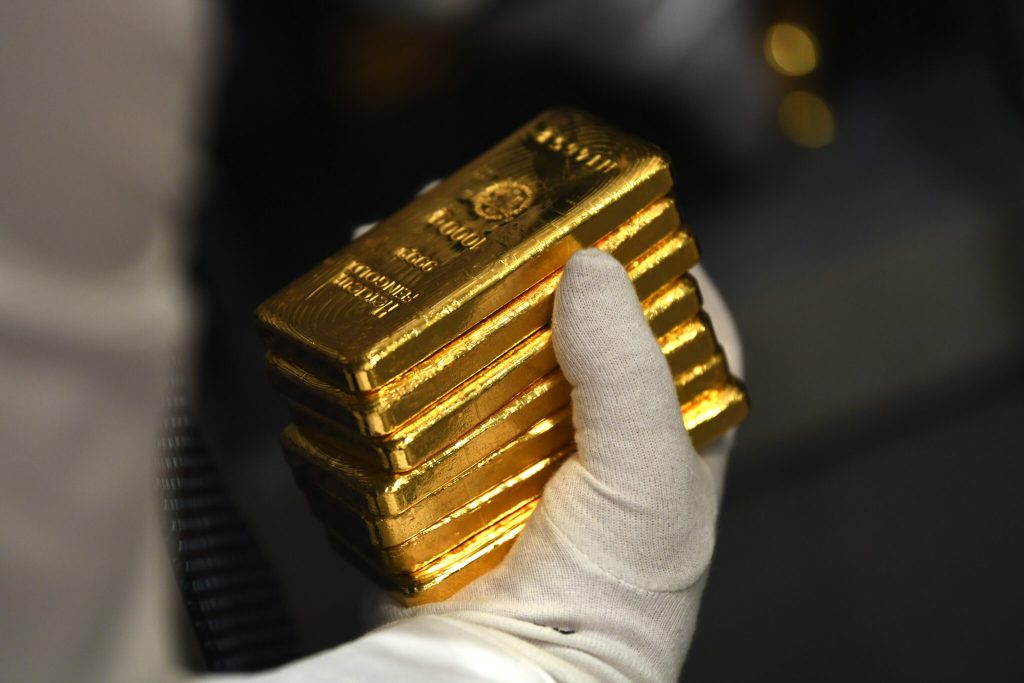
In the ever-shifting landscape of global finance, few commodities capture the attention of investors quite like gold. Recently, the price of gold has hovered around an impressive $4,600 per ounce, marking a significant moment in the market as investors grapple with the implications of U.S. monetary policy. As we delve into the latest developments surrounding gold, we will explore the factors influencing its price, the role of central banks, and what this means for traders and investors moving forward.
Gold has always been regarded as a safe haven asset, particularly in times of economic uncertainty. Currently, the precious metal is on track to achieve its most substantial monthly gain this century, having surged nearly 14% in August. This remarkable rally can be attributed to various factors, including unexpected interventions by the U.S. Treasury in the bond market, which have reignited investor interest in gold as a hedge against inflation and currency debasement. Such dynamics are particularly relevant as Federal Reserve Chairman Kevin Warsh prepares to address the market in a pivotal speech that could shape the future of monetary policy.
The backdrop of this price surge is the ongoing debate about U.S. interest rates. High rates typically pose a challenge for non-yielding assets like gold, as investors seek better returns elsewhere. As Warsh prepares to speak at the annual Jackson Hole symposium, market participants are eager to glean insights into the Fed’s strategy regarding inflation management. With inflation consistently exceeding the Fed’s 2% target, the central bank’s actions—or inactions—could have significant repercussions for the gold market.
Economists and policymakers are currently split on the necessity of additional rate hikes. While the Fed maintained steady borrowing costs in July, dissenting voices within the committee have urged for a quarter-point increase to address rising price pressures. The statements made by various Fed officials at Jackson Hole will be closely monitored, as they could either reinforce or quell market fears regarding inflation—an event that analysts believe is crucial for shaping the narrative surrounding gold.
Investor sentiment has played a critical role in gold’s recent price movements. The strong rebound in gold prices is underpinned by diverse investor engagement, which has allowed the metal to maintain its position above the 200-day moving average—a significant technical support level. Moreover, the demand for gold-backed exchange-traded funds (ETFs) has seen a notable uptick, with more than 28 tons added in the past week alone, marking the highest increase since January. This surge in ETF holdings reflects a broader trend of institutional and retail investors seeking refuge in gold amidst volatile economic conditions.
As central banks worldwide also step up their gold purchases, the dynamics of the market continue to evolve. Citigroup strategist Dirk Willer highlighted that the U.S. Treasury’s efforts to manage long-term borrowing costs could shift investor preferences away from steepener trades—strategies betting on widening gaps between short- and long-term Treasury yields—and back toward gold. Such a shift indicates a growing recognition of gold as a viable hedge against economic instability.
At the current moment, spot gold has seen a slight increase of 0.1%, reaching $4,606.04 an ounce, while other precious metals like silver, platinum, and palladium have also shown positive movements. These price fluctuations highlight the interconnectedness of precious metals in the face of changing economic conditions and investor sentiment.
For traders and investors, several key takeaways emerge from the current gold market scenario. Firstly, the upcoming speech by Federal Reserve Chairman Kevin Warsh holds substantial importance, as it could influence interest rate expectations and, consequently, gold prices. Secondly, the increasing participation of central banks in gold purchases signifies a strategic pivot towards gold as a reliable asset, which may enhance its appeal for individual investors. Finally, the broader implications of U.S. monetary policy on global markets underscore the necessity for investors to remain vigilant and adaptable in their strategies.
In conclusion, gold’s recent rally reflects a confluence of factors ranging from monetary policy debates to shifts in investor behavior. As the market anticipates Warsh’s remarks at Jackson Hole, all eyes will be on how these developments shape the future trajectory of gold. For investors looking to navigate this complex landscape, understanding the interplay between economic indicators, central bank actions, and market sentiment will be crucial in making informed decisions in the precious metals arena. With uncertainty remaining a constant in today’s financial environment, gold’s role as a protective asset continues to be reaffirmed.