
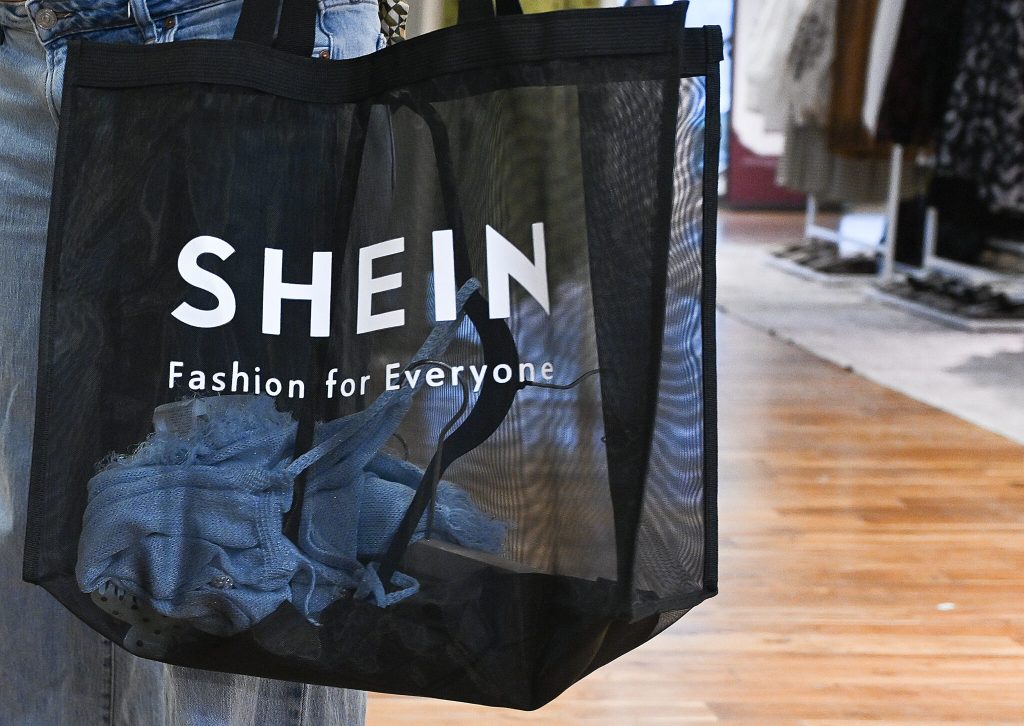
In an era where market valuations can fluctuate dramatically, Shein Global Holdings’ recent initial public offering (IPO) has captured the attention of investors and industry watchers alike. Once regarded as a potential unicorn worth $100 billion, the fast-fashion retailer has now found its place in the market with a valuation of $26 billion after raising $1.7 billion in Hong Kong. While this represents a significant drop from its peak, the question remains: is there still potential for growth, or is this valuation too steep given the current market dynamics?
Understanding Shein’s Journey
Founded in China and now headquartered in Singapore, Shein has established itself as a leader in the fast-fashion industry. The company expertly leverages a data-driven supply chain that allows it to design, manufacture, and ship low-cost apparel directly to consumers at an impressive speed. This model proved particularly lucrative during the pandemic, as many consumers turned to online shopping, leading to a surge in Shein’s valuation.
However, the company is not without its challenges. In recent times, Shein’s growth has begun to plateau, hindered by increased tariffs and stiff competition, especially from rivals like Temu in critical markets such as the United States and Europe. According to estimates from Bloomberg Intelligence, Shein’s sales are projected to grow by only 3.4% to $44.3 billion in the coming year, with a net income of $1.7 billion.
The Numbers Behind the Valuation
The IPO has valued Shein at over 15 times its forward earnings, a figure that significantly overshadows the 7.4 times ratio of its competitor, PDD Holdings Inc. (parent company of Temu), as well as the 10.7 times multiple for the benchmark Hang Seng Index. This discrepancy raises eyebrows among potential investors, who may question whether Shein’s stock is already pricing in an anticipated turnaround in growth before it has even occurred.
Gary Tan, a portfolio manager at Allspring Global Investments, remarked that investors may adopt a cautious stance post-listing until Shein demonstrates that it can reset its business model to spark renewed growth. This sentiment is echoed by several market analysts who are wary of the company’s capacity to reclaim its former glory amidst evolving consumer preferences and increased competition.
Key Insights for Investors
As Shein prepares for its public debut, several key points stand out for potential investors:
1. **Market Conditions**: The current investing climate is heavily influenced by the rise of artificial intelligence and technology stocks, which could overshadow traditional sectors like retail. Investors may need to reassess their priorities and consider how Shein fits into their broader investment strategy.
2. **Competition**: The fast-fashion industry is increasingly competitive. With players like Temu gaining traction, Shein must innovate and adapt to retain its market share. Investors should monitor how Shein responds to these competitive pressures.
3. **Growth Projections**: While the company has demonstrated robust growth in the past, current projections are more modest. Investors should weigh these forecasts against the company’s valuation to determine whether the stock represents a sound investment.
4. **Valuation Comparison**: Shein’s valuation aligns closely with that of Alibaba Group Holding Ltd., which is also navigating its own challenges. Investors need to evaluate what sets Shein apart from incumbents like Alibaba, whose established market presence and diversified offerings may provide more stability.
Conclusion
Shein’s IPO marks a significant moment for the fast-fashion retailer and the broader market. While the company has immense potential due to its innovative business model and global reach, investors must carefully consider the implications of its current valuation, competitive landscape, and growth prospects. As the dust settles from the IPO, it will be crucial for Shein to prove its ability to adapt and thrive in a rapidly changing market. For investors, this could mean a cautious approach, as they wait to see whether Shein can reignite its growth trajectory or if it will struggle to maintain relevance in an increasingly crowded space.