
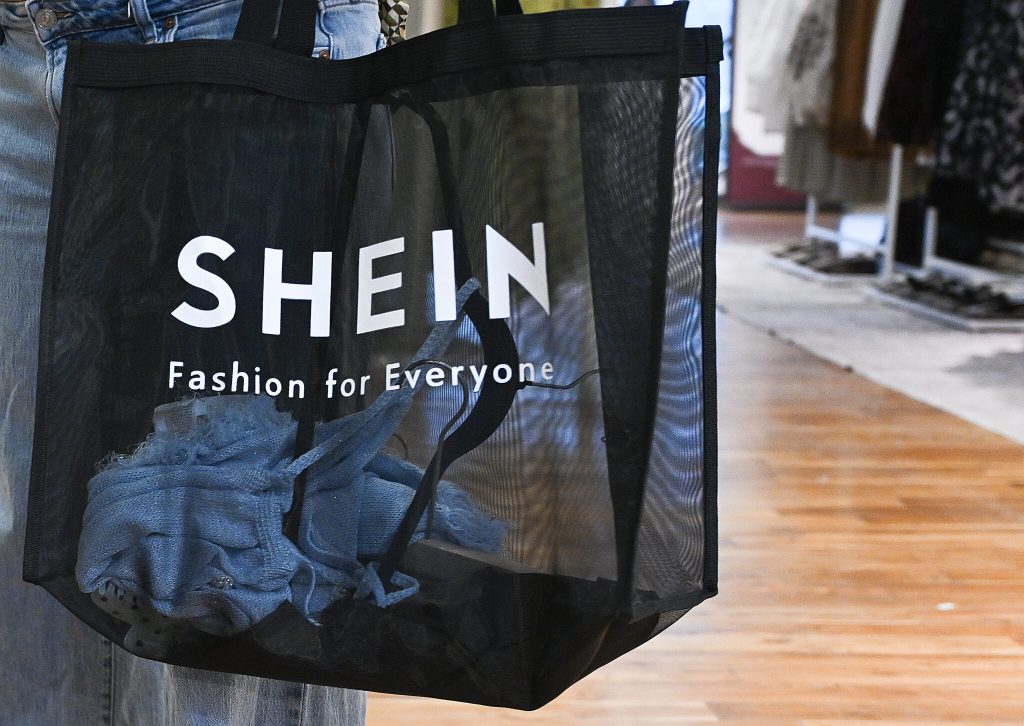
The fast-fashion retail sector has long been a hotbed of activity, driven by ever-changing consumer preferences and the rapid turnover of clothing trends. However, the initial public offering (IPO) of Shein Global Holdings Ltd. marks a critical moment for the industry, especially given the contrast between its current valuation and what it once commanded. As the company prepares to debut on the Hong Kong Stock Exchange, investors are left pondering whether its current market value reflects its true potential or if it is merely a cautionary tale of overvaluation.
Shein, a brand that has quickly risen to prominence in the world of online retail, recently completed its IPO, raising a substantial $1.7 billion. This funding round has placed the company’s market valuation at approximately $26 billion. While this figure may sound impressive, it pales in comparison to the nearly $100 billion valuation Shein once held during the height of the pandemic e-commerce boom in 2022. This drastic drop raises questions about the company’s future growth prospects and the sustainability of its business model in a rapidly evolving market.
One prominent concern is the company’s ability to maintain its competitive edge amidst a backdrop of slowing growth and rising tariff challenges. Shein’s anticipated sales growth for the upcoming year is projected at a modest 3.4%, translating to total revenues of $44.3 billion. Additionally, the company is expected to generate net income of around $1.7 billion. These figures, while positive, indicate a marked slowdown compared to the explosive growth the company experienced during the pandemic, when online shopping surged due to lockdowns and social distancing measures.
A critical aspect of Shein’s appeal lies in its data-driven supply chain, which allows for rapid production and distribution of low-cost apparel directly to consumers. The company has effectively capitalized on changing fashion trends, offering a vast selection of trendy clothing at competitive prices. However, the landscape is shifting as competitors, particularly Temu, have begun to encroach on Shein’s market share in key regions, including the US and Europe. This increased competition has not only affected Shein’s growth trajectory but has also led to concerns about its long-term viability in a saturated market.
From an investment perspective, Shein’s IPO is notable for its valuation metrics. The company is set to debut with a price-to-earnings (P/E) ratio of over 15 times its forecasted earnings. This valuation places Shein at a premium compared to its competitor, PDD Holdings—the parent company of Temu—which has a P/E ratio of just 7.4 times. Furthermore, this figure is above the 10.7 times P/E ratio of the Hong Kong benchmark Hang Seng Index, raising questions about whether investors are overestimating Shein’s potential for growth.
Investors are understandably cautious about Shein’s prospects post-listing. Gary Tan, a portfolio manager at Allspring Global Investments, highlights that the stock’s current valuation seems to reflect expectations of a growth rebound before the company has demonstrated its ability to achieve such outcomes. Without clear evidence that Shein can adapt its business model to reignite growth, many investors may choose to adopt a wait-and-see approach.
Additionally, the context of Shein’s IPO is essential to consider. The fast-fashion sector must now contend with an investment landscape increasingly dominated by artificial intelligence (AI) and technology-driven companies. This shift raises the question of whether traditional retailers like Shein can continue to attract capital in a climate that favors tech innovations. Comparisons with Alibaba, a giant in the Chinese e-commerce space that is pivoting aggressively towards AI, further underscore the competitive pressures Shein faces.
In conclusion, Shein’s IPO represents both an opportunity and a challenge for investors and the fast-fashion industry as a whole. While the company has built an impressive global brand through its agile supply chain and competitive pricing, the current market dynamics pose significant hurdles for sustained growth. As Shein navigates its public debut, investors will be closely monitoring its performance and strategic adjustments to determine whether this fast-fashion leader can reclaim its former glory or if it will continue to grapple with the realities of a changing retail environment.