
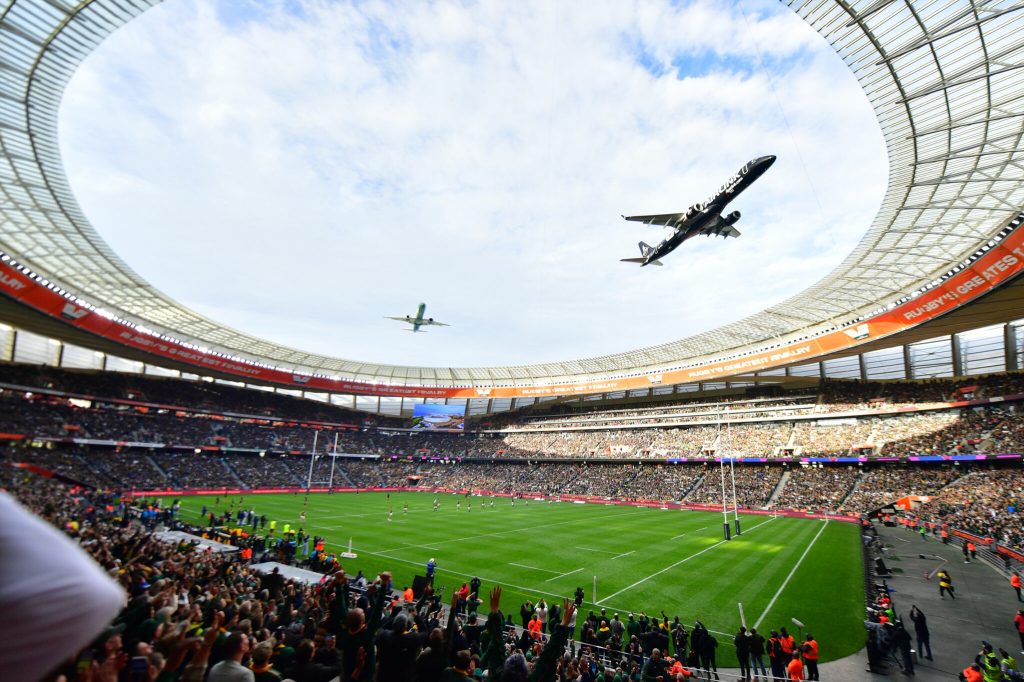
In a remarkable display of aerial prowess that has ignited discussions about aviation safety, South African airline Airlink recently executed a double flypast over a highly anticipated rugby match in Cape Town. This event has drawn both admiration and criticism, leading many to question the implications of such maneuvers in densely populated areas. As the world of aviation continues to evolve, incidents like these highlight the delicate balance between spectacle and safety.
Airlink, a regional airline with strong ties to Qatar Airways, operates a fleet of around 70 Embraer passenger jets. The flypast took place on a Saturday, coinciding with a match between two of rugby’s most storied teams: South Africa’s Springboks and New Zealand’s All Blacks. Before the event, Airlink emphasized that the flights were conducted by a highly skilled crew of three senior captains, who meticulously planned and rehearsed the maneuver. According to statements from the airline, the flyover complied with local aviation authority regulations, adhering to approved safety altitudes and speed limits.
Despite Airlink’s assurances, the incident prompted a mixed reaction from the public and aviation experts alike. Flight-tracking services revealed that one of the aircraft passed alarmingly close—less than 15 meters—over the DHL Stadium, where thousands of fans had gathered to witness the match. This proximity raised eyebrows and sparked a debate about whether such maneuvers, while thrilling, could pose a risk to public safety.
This flyover was not an isolated incident in South African aviation history; it echoes a tradition that dates back to the 1995 Rugby World Cup final, which was famously attended by Nelson Mandela. Such displays have become part of the local culture, blending sports with aerial excitement. Yet, as the industry continues to grapple with safety concerns, it is essential to evaluate whether these events align with modern aviation standards.
Key points to consider include the rigorous planning involved in executing such flyovers. Airlink has stressed that the crew was not only experienced but that the flights were conducted under strict operational protocols. While these assurances are comforting, they also raise questions about the adequacy of existing regulations concerning low-flying aircraft in populated areas. The incident underscores the need for ongoing scrutiny and assessment of aviation practices, particularly as they pertain to public events.
From a trader or investor perspective, this situation highlights the complex interplay between public perception, safety, and operational decisions within the aviation sector. Stakeholders must be aware of how such incidents can affect an airline’s reputation and, subsequently, its financial performance. While Airlink may have gained visibility and generated excitement around the event, the potential for negative publicity could have lasting implications. Investors should pay attention to how the airline manages its public relations in the aftermath of the flyover and whether it takes proactive measures to reinforce its safety protocols.
Moreover, it is vital to consider the broader implications for the aviation industry as a whole. As airlines seek to engage audiences and create memorable experiences, they must also prioritize safety and regulatory compliance. The balance between providing thrilling experiences and adhering to safety standards is more precarious than ever, particularly in an era where public scrutiny is heightened.
In conclusion, Airlink’s double flypast over a rugby match serves as a compelling case study in the aviation industry’s ongoing challenges. While the excitement of such events can enhance an airline’s brand and foster community engagement, they must be approached with caution. As the industry continues to evolve, it is imperative for airlines to strike a careful balance between spectacle and safety to ensure the well-being of passengers and the public alike. Moving forward, all stakeholders must remain vigilant in assessing the ramifications of such maneuvers, ensuring that safety remains paramount in the pursuit of aerial excitement.