
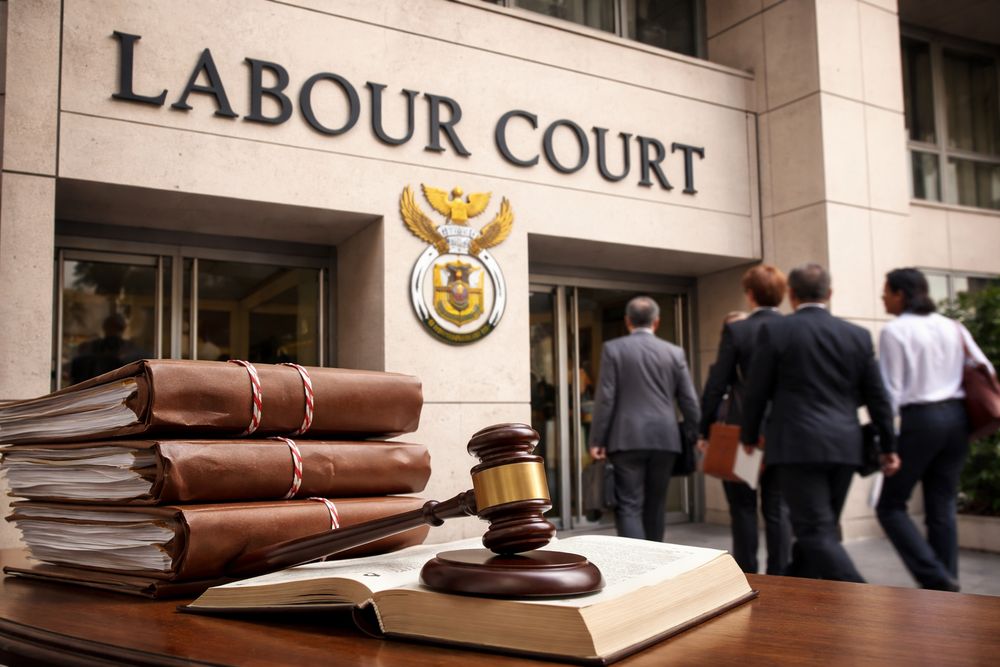
In a recent ruling, the Labour Court has shed light on crucial principles regarding employee dismissals, particularly emphasizing the evidentiary burden and the importance of procedural fairness. This case, which involved a group of employees at Fraser Alexander (Pty) Ltd, raises significant questions about the nature of workplace protests and the responsibilities of employers in addressing employee behavior.
Understanding the context of this ruling is essential for both employers and employees as it provides valuable insights into the legal standards that govern workplace conduct and dismissal procedures.
The case at hand revolved around an incident that took place during a lunch break at Fraser Alexander’s Elikhulu Tailings Project, situated near the Evander Gold Mine. Tensions had been simmering due to proposed changes in overtime pay, prompting management to prepare for potential industrial actions. On August 22, 2019, a group of nine employees gathered outside the worksite, engaging in what the employer termed an illegal picket related to the ongoing overtime dispute. Conversely, the employees contended that their gathering was merely a rehearsal for a colleague’s upcoming wedding, complete with songs and dances.
The Labour Court’s decision hinged on whether the employer could substantiate its claims of misconduct against the employees. The court ultimately ruled in favor of the employees, stating that Fraser Alexander had not met the necessary evidentiary standards to prove that the gathering constituted illegal picketing.
A pivotal aspect of the ruling was the court’s rejection of the employer’s argument based on a lack of evidence. Despite the employer’s allegations, there was no supporting evidence such as CCTV footage, photographs, or credible eyewitness testimonies to corroborate the claims. The absence of substantial proof meant that the court could not accept the employer’s narrative as valid. Furthermore, the court noted that the gathering lasted only about 30 minutes, did not involve any violence or disruption, and the employees returned to work promptly afterward. This lack of operational impact further weakened the employer’s case.
The ruling underscores the critical notion that the burden of proof lies with the employer when it comes to demonstrating employee misconduct. Rather than the employees needing to prove their innocence, the employer is obligated to provide concrete evidence of any alleged wrongdoing. In this instance, the court found that Fraser Alexander failed to discharge this burden, leading to the conclusion that the dismissals of the nine employees were both substantively and procedurally unfair.
Even if the employer had been able to establish that the conduct amounted to unlawful picketing, the court highlighted that the dismissals would have faced significant procedural flaws. The employees had not been informed that their actions were deemed unlawful, nor were they given an opportunity to rectify their behavior before facing termination. This lack of due process violated fundamental principles of fairness, which are critical in employment law.
Key takeaways from this case include the importance of due diligence on the part of employers when addressing employee conduct. Employers must maintain clear communication regarding acceptable behavior and ensure that they have sufficient evidence before proceeding with disciplinary actions, particularly dismissals. This ruling serves as a reminder that procedural fairness is not just a legal requirement but a vital component of maintaining a positive workplace culture.
For traders and investors, this ruling has broader implications for how companies manage their human resources and respond to employee actions. Organizations that cultivate open lines of communication and foster a culture of respect are less likely to face costly legal disputes stemming from employee grievances. Moreover, businesses that prioritize procedural fairness will likely enhance their reputations, attract talent, and improve overall morale.
In conclusion, the Labour Court’s decision in this case emphasizes the significance of evidentiary standards and procedural fairness in employee dismissals. It serves as a crucial reminder for employers to tread carefully when addressing employee behavior, ensuring that they adhere to legal requirements and maintain a fair process. For employees, the ruling reinforces the notion that they are entitled to fair treatment and due process in the workplace. As the legal landscape continues to evolve, both employers and employees must stay informed and proactive to navigate the complexities of employment law effectively.