
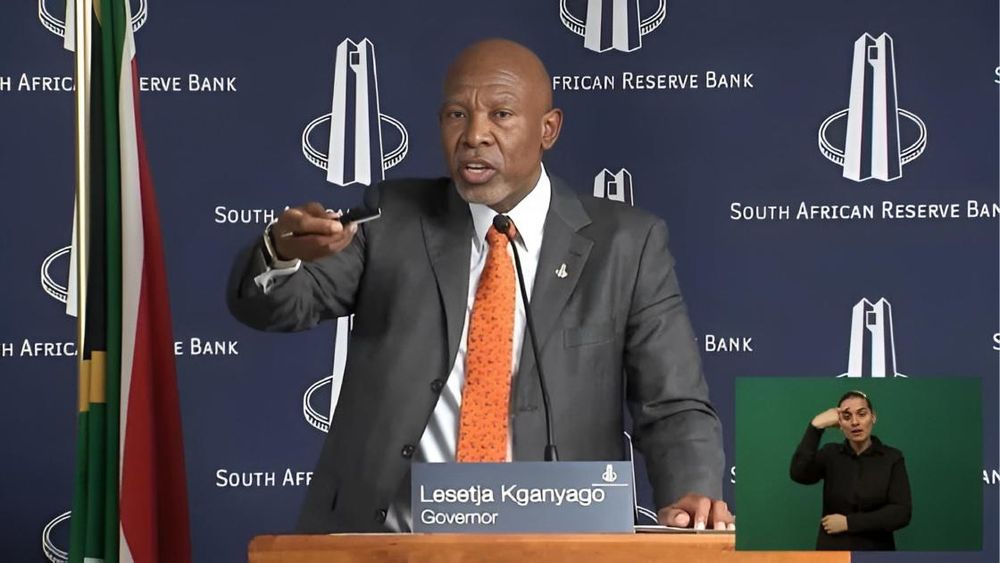
In a pivotal moment for South African monetary policy, the South African Reserve Bank (SARB) recently announced its decision to maintain the prime lending rate at 10.5%. This choice, made by the Monetary Policy Committee (MPC), underscores a delicate balancing act as the central bank navigates a complex economic landscape. With inflationary pressures still looming, the implications of this decision extend far beyond mere numbers, affecting borrowers, investors, and the broader economy.
The MPC’s decision to keep interest rates unchanged came after a thorough examination of the current economic indicators and future projections. The committee voted four to two in favor of this decision, with two members advocating for a modest increase of 25 basis points. SARB Governor Lesetja Kganyago emphasized that while the current stance is deemed “appropriate for now,” the committee remains committed to a meeting-by-meeting approach, adapting to evolving economic conditions.
The backdrop to this decision is a South African economy grappling with persistent inflation, which continues to hover above the target set by the Reserve Bank. Although the inflation outlook has shown slight improvement since the last MPC meeting, concerns linger about rising fuel costs and their impact on consumer prices. The central bank projected that headline inflation is likely to remain above 4% until early next year, primarily due to elevated fuel prices. The MPC labeled services inflation as “problematic,” indicating that various sectors are experiencing significant price pressures.
Economists have taken note of these developments, with Johann Els from PSG commenting that the tone of the MPC’s statement was less hawkish than expected. He pointed out that the committee viewed rising oil prices and geopolitical tensions in the Middle East more as risk scenarios rather than immediate threats to the central forecast. This nuanced approach reflects the SARB’s effort to balance the need for economic stability with the realities of inflationary pressures. Notably, the bank has adjusted its oil price assumptions downward and revised its inflation forecast from 4.4% to 4%.
The decision to pause interest rate hikes comes at a time when the South African economy is showing signs of losing momentum. The MPC acknowledged that both consumer and business confidence have weakened, compounded by rising fuel prices and ongoing uncertainties. As households face the burden of increased fuel costs, coupled with municipal dysfunction, economic activity is being stifled. Kristof Kruger, head of fixed income trading at Prescient Securities, highlighted that concerns about economic growth played a crucial role in the SARB’s decision to maintain the status quo. He noted that while textbook economics would suggest a rate hike given the current inflation rate of around 5%, the SARB opted to prioritize growth over traditional monetary policy orthodoxy.
For traders and investors, this decision signals a cautious approach from the SARB. The central bank’s commitment to monitoring economic indicators closely suggests that future interest rate movements will be heavily influenced by inflation trends and growth dynamics. Investors should remain vigilant, as any shifts in inflationary pressures or unexpected economic developments could prompt the MPC to reevaluate its stance sooner than anticipated.
Key takeaways from this development include the recognition that the SARB is not merely reactive but is contemplating the broader economic context. The central bank’s flexibility in adjusting its approach based on real-time data is critical for navigating the uncertainties that characterize the current economic environment. This emphasis on adaptability could help stabilize markets as investors contemplate their next moves in a landscape marked by fluctuating inflation and growth challenges.
In conclusion, the SARB’s decision to hold interest rates steady reflects a strategic balancing act between combating inflation and fostering economic growth. As the central bank continues to assess the evolving economic landscape, borrowers, traders, and investors must remain attuned to potential shifts in policy. The coming months will be crucial in determining whether inflation pressures ease or escalate, shaping the future trajectory of interest rates in South Africa. With the SARB poised to act based on the unfolding economic narrative, stakeholders must prepare for a dynamic financial environment where adaptability and vigilance will be key to navigating the challenges ahead.