
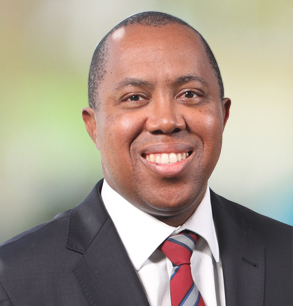
In the ever-evolving landscape of corporate finance, leadership transitions often serve as pivotal moments that can either stabilize or destabilize an organization. The recent resignation of Isaac Malevu, the Chief Financial Officer of the Industrial Development Corporation (IDC), has brought to light not just a change in personnel but also significant financial challenges within the organization. As the IDC grapples with a staggering loss and the need for substantial financial corrections, the implications for its future and the broader economic landscape are profound.
Isaac Malevu’s departure from the IDC marks the end of a six-year tenure during which he played a crucial role in steering the organization through turbulent times, including the challenges posed by the Covid-19 pandemic. His exit prompts questions about the financial health of the IDC, particularly in light of its recent performance and the issues surrounding its financial reporting.
The IDC, a state-owned development finance institution in South Africa, has been under scrutiny following the release of its financial results for the year ending March 2026. The reports revealed significant discrepancies in its accounting practices, leading to a restatement of previous financial results, particularly for the year 2025. These restatements were necessitated by improper asset valuations and a failure to adhere to requisite accounting standards as mandated by the Public Finance Management Act.
Auditors from BDO and Deloitte flagged material misstatements amounting to R2 billion, which are substantial enough to potentially distort the decision-making processes of stakeholders relying on these financial statements. The IDC’s internal audit committee underscored the need for considerable improvements across various aspects of financial governance, including controls, disclosures, and management review procedures. Such findings highlight a systemic issue within the organization’s financial governance framework, raising alarms about its operational integrity.
Despite these challenges, the IDC has made strides toward rectifying its financial reporting processes. Following the implementation of a remediation program designed to enhance governance and documentation, the organization was able to secure an unqualified audit opinion. This is a significant milestone, indicating that, after considerable effort, the IDC’s financial statements have achieved compliance with established accounting standards. Furthermore, the board has mandated quarterly updates on the remediation efforts to ensure ongoing accountability and transparency.
The financial results released by the IDC were alarming, showing a staggering loss of R4.65 billion. This represents a dramatic fall from the previous year’s profit of R329 million and a remarkable decline from the R7.5 billion profit recorded in 2024. A contributing factor to this financial downturn is the IDC’s substantial stake in Foskor, a phosphate mining and fertilizer production company that reported a loss of R2.8 billion. Such heavy losses not only impact the IDC’s bottom line but also reflect broader issues within its investment portfolio and strategic decision-making.
For traders and investors, the IDC’s recent financial turmoil presents a complex scenario. While the organization has taken steps to address its governance issues, the substantial losses and the need for restatements raise concerns about risk management and financial stability. Investors might need to reassess their confidence in the IDC’s ability to navigate these challenges effectively, particularly given the broader economic context in which state-owned enterprises operate. The transition of leadership, particularly with Malevu’s exit, could also influence investor sentiment as they evaluate the new strategic direction under the incoming management.
In conclusion, the resignation of Isaac Malevu and the IDC’s financial struggles are indicative of the broader challenges faced by state-owned enterprises in South Africa. The significant financial losses and the need for corrective measures highlight systemic issues that require urgent attention. As the IDC embarks on a journey of remediation and recovery, stakeholders will be closely monitoring its progress. For investors and traders, this situation serves as a reminder of the critical importance of sound financial practices and the potential ramifications when these practices falter. As the IDC seeks to restore its reputation and financial health, its future remains uncertain, and the lessons learned from this episode will undoubtedly shape its trajectory moving forward.