
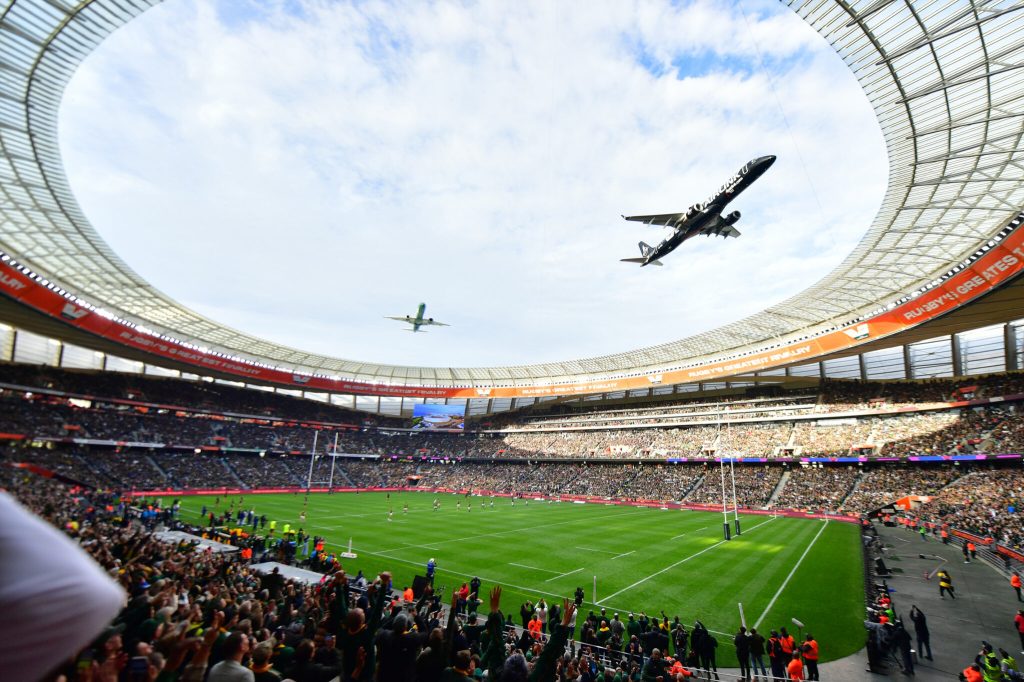
In a world where brand visibility often takes center stage, the recent flypast by Airlink over Cape Town Stadium has sparked a debate that transcends traditional marketing and sponsorship strategies. What was initially intended as an exhilarating pre-match spectacle for the Springboks-All Blacks Test has morphed into a whirlwind of controversy, raising questions about safety while simultaneously generating a tidal wave of publicity for the regional airline. This incident shines a spotlight on the fine line between effective marketing and the potential pitfalls of public perception.
The flypast, featuring two Embraer aircraft soaring in formation, was designed to capture the attention of sports fans and aviation enthusiasts alike. However, the aftermath has revealed a more complicated narrative. As the South African Civil Aviation Authority initiated an investigation into the safety parameters of the flyover, Airlink found itself at the center of a media storm that has led to millions of social media views and extensive coverage across international news outlets. This scenario presents a fascinating case study on the impact of controversy on brand perception and marketing effectiveness.
The core of the situation stems from an event that lasted only seconds but produced days of headlines and online chatter. Airlink’s decision to showcase its aircraft in such a high-profile manner was not just an extravagant publicity stunt; it was a calculated move aimed at elevating the brand’s visibility. The airline’s management has defended the flypast as a meticulously planned event, emphasizing that it was conducted by highly experienced crews under approved conditions. Nonetheless, the Civil Aviation Authority’s scrutiny has extended the life of the story, keeping it in the public eye longer than anticipated.
From a marketing perspective, the exposure generated by the flypast has been nothing short of exceptional. Unlike traditional advertising, where a brand name might sit quietly in the background, the aircraft themselves became the focal point of the spectacle. Images and videos of the flypast circulated widely, placing Airlink’s branding front and center in a captivating manner. The airline’s own footage garnered millions of views on social media platforms, but it wasn’t just the original content that fueled the buzz; the extensive commentary and debate surrounding the safety of the event amplified the reach even further.
However, with great visibility comes the challenge of maintaining a positive brand image. The cancellation of a subsequent flypast at FNB Stadium due to unfavorable weather conditions has only added to the complexity of the situation. While Airlink’s management has cited safety concerns as the reason for the cancellation, the decision also feeds into the ongoing narrative questioning the airline’s judgment and adherence to safety protocols. This duality presents a unique challenge for Airlink as it navigates the fine line between leveraging the publicity and managing the potential fallout from the controversy.
Key takeaways from this incident include the critical importance of risk assessment in marketing strategies, particularly for companies operating in highly regulated industries like aviation. The immediate benefits of heightened visibility can be overshadowed by long-term reputational damage if safety concerns are not adequately addressed. Furthermore, this situation underscores the need for brands to be prepared for the unpredictable nature of public perception, especially in the age of social media where news cycles can be incredibly swift and unforgiving.
For traders and investors, the implications of Airlink’s flypast extend beyond mere publicity. The airline’s ability to convert this moment of controversy into tangible business growth will be a point of interest moving forward. Will they be able to capitalize on the increased exposure to boost ticket sales and brand loyalty? Or will the lingering questions around safety and judgment hinder their potential? Such narratives are vital for investors who wish to gauge the future performance of Airlink and similar companies.
In conclusion, Airlink’s flypast over Cape Town Stadium serves as a compelling reminder of the complex interplay between marketing, safety, and public perception. While the airline has undoubtedly gained significant visibility through this controversial event, it must now navigate the challenges that come with it. As it moves forward, the key will be to balance the benefits of heightened awareness with a steadfast commitment to safety and regulatory compliance. In a landscape where headlines can quickly shift, maintaining the trust of consumers and regulators alike will be essential for Airlink’s sustained success.