
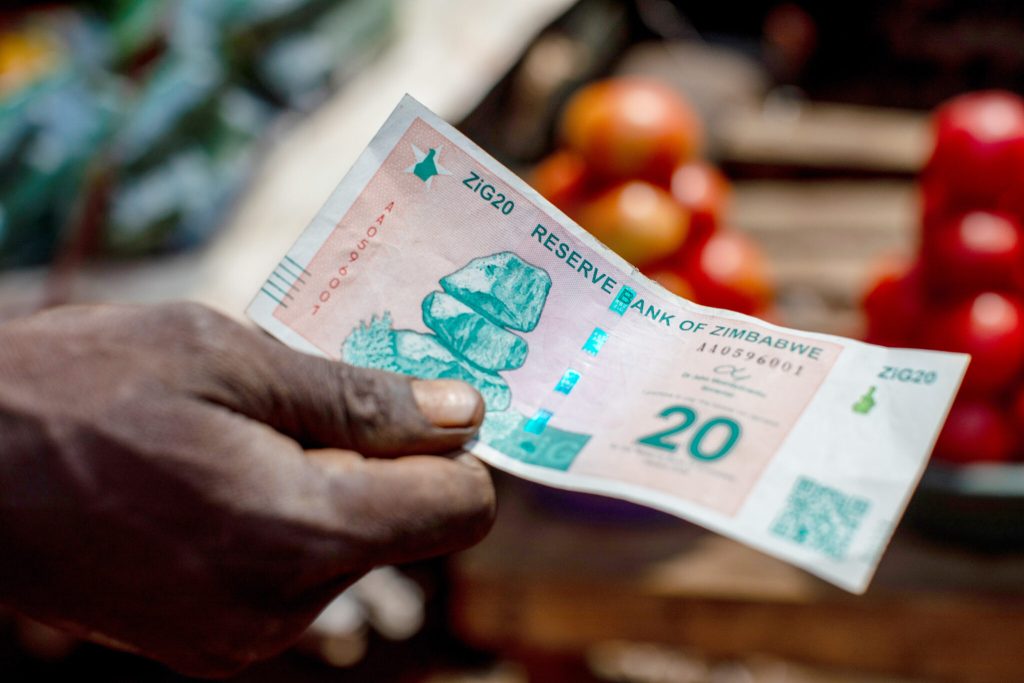
In the evolving landscape of Zimbabwe’s economy, the proposed shift towards a single currency system raises significant concerns and potential pitfalls. The World Bank has recently issued a stark warning regarding the Zimbabwean government’s ambitious plan to phase out the use of foreign currencies, particularly the US dollar, by the year 2030. This initiative aims to bolster the newly introduced bullion-backed currency known as the ZiG. However, the financial institution cautions that rushing into this transition without establishing sufficient credibility for the local currency could lead to adverse effects, including capital flight.
Zimbabwe’s economic history has been tumultuous, marked by hyperinflation and the collapse of its previous currency, the Zimbabwean dollar. The country returned to using the US dollar in 2009 after a severe economic crisis and has relied on this stable currency to facilitate trade and stabilize prices. The government’s current ambition to phase out the dollar in favor of the ZiG marks a pivotal moment in its economic policy. The World Bank’s report underscores the importance of timing and the careful management of this transition, emphasizing that a hasty shift could undermine recent economic gains.
The potential dangers of a rapid de-dollarization are manifold. The World Bank notes that previous efforts to transition to a local currency, such as the reintroduction of the Zimbabwean dollar in 2019, resulted in significant economic instability. Unchecked inflation and a lack of confidence in the local currency led to widespread capital flight as individuals and businesses sought to protect their assets by moving their money into more stable foreign currencies. This trend not only exacerbated inflationary pressures but also widened the gap in the parallel market exchange rates, further destabilizing the economy.
Key points emerging from the World Bank’s analysis highlight the delicate balance required in navigating this currency reform. Firstly, the need for a credible and stable local currency is paramount. Without public confidence in the ZiG, the risk of capital outflow remains high. Secondly, the sequencing of monetary policy changes is crucial. The World Bank suggests that a phased approach, allowing time for the local currency to gain credibility and for economic conditions to stabilize, would be far more beneficial than a sudden overhaul of the currency system.
For traders and investors, these developments present both challenges and opportunities. On one hand, the volatility associated with currency transitions can create a precarious environment for investment, as fluctuations in exchange rates and inflation can dramatically affect profitability. On the other hand, for those who can navigate this landscape effectively, there may be significant opportunities to capitalize on emerging market dynamics. Investors who understand the local economic conditions and the potential for recovery in Zimbabwe could find lucrative avenues in sectors that may benefit from a stabilized currency regime.
Furthermore, the World Bank’s insights into Zimbabwe’s debt situation reveal a potential path towards greater financial integration with international markets. The country has faced isolation from global financial systems since its default in 1999, but recent discussions with multilateral creditors and the restructuring of its significant debt obligations could pave the way for improved external financing conditions. The co-chairing of a new body by France and the UK to assist in this restructuring indicates a shift in the international community’s approach to Zimbabwe, potentially opening the door to foreign investment and economic rejuvenation.
In conclusion, as Zimbabwe embarks on this ambitious journey towards a mono-currency system with the ZiG, it must tread carefully. The warnings from the World Bank serve as a crucial reminder of the complexities involved in currency reform. Establishing the credibility of the local currency and managing the transition thoughtfully will be essential to avoid repeating past mistakes. For investors and traders, this period holds both risk and opportunity, necessitating a well-informed and strategic approach to navigate the unfolding economic landscape. As Zimbabwe stands at this crossroads, the choices made today will shape its economic future for years to come.