
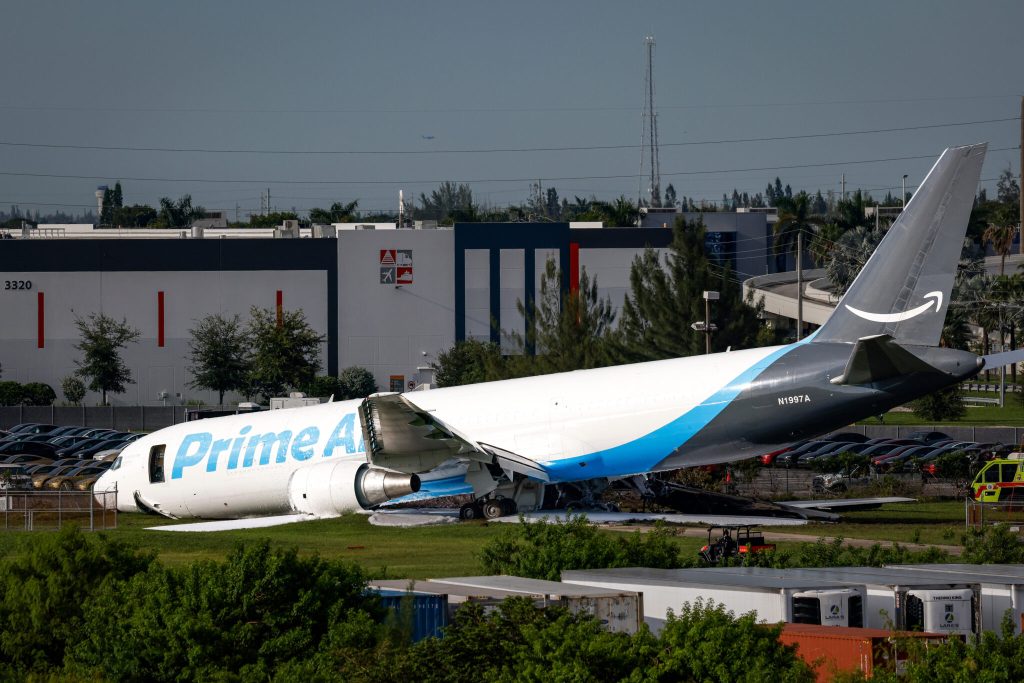
In a heartbreaking incident that unfolded during one of the busiest travel weekends of the year, a cargo plane operated by Amazon’s Prime Air service crashed while attempting to land at Miami International Airport. The Boeing 767-300, managed by 21 Air, tragically overran the runway, resulting in five fatalities and several injuries. As investigations are launched into the causes of this accident, it’s crucial to examine the implications it has for the aviation industry, especially in the realm of cargo transport.
The event occurred on Sunday afternoon, when Prime Air Flight 7598, arriving from San Juan, Puerto Rico, failed to stop on the runway and collided with vehicles situated near the airport. Miami-Dade Fire Rescue reported the scene was engulfed in flames and smoke, with emergency responders quickly mobilizing to rescue those trapped within the wreckage. Following the crash, Miami-Dade County Mayor Daniella Levine Cava confirmed that in addition to the five lives lost, five individuals sustained injuries, three of whom were reported in critical condition. The immediate aftermath saw a suspension of airport operations, with runways and taxiways temporarily closed, although some reopened hours later.
As a vital hub for international cargo, Miami International Airport plays a significant role in the U.S. freight landscape. It has established itself as the busiest airport for freight in the United States, particularly for shipments to and from Latin America and the Caribbean. In 2025, the airport handled nearly 3.5 million tons of freight, further emphasizing its importance in global trade. Other notable freight hubs include Louisville, Kentucky, and Memphis, Tennessee, both of which serve as essential centers for logistics giants like UPS and FedEx.
The incident highlights the inherent risks associated with cargo aviation, particularly as demand for air freight services continues to rise. With the growing dependence on e-commerce, the safety protocols surrounding cargo flights must prioritize stringent measures to ensure the well-being of both crew and ground personnel. The complexities of firefighting during aviation emergencies cannot be understated, as emphasized by Miami-Dade Fire Rescue Chief Ray Jadallah, who noted the challenging nature of the fire that erupted in the aircraft’s engine compartments. This incident serves as a stark reminder of the potential dangers faced by emergency responders and the critical need for effective safety protocols in aviation.
Key takeaways from this tragic event include the vital importance of thorough safety inspections and maintenance checks for aircraft, particularly when operating in high-pressure environments like cargo transport. The Federal Aviation Administration (FAA) has already announced an investigation into the incident, a standard procedure following any aviation mishap. The National Transportation Safety Board (NTSB) will also conduct its own examination to determine the root causes and identify any lapses in safety measures.
For traders and investors, the implications of this incident could have far-reaching effects. Companies involved in the logistics and air freight sector may face increased scrutiny and potential regulatory changes as a result of this tragedy. Investors should keep an eye on the stock performance of companies within this industry, particularly those directly linked to cargo operations, as heightened safety concerns could impact operational costs and profitability.
Furthermore, the incident could lead to shifts in consumer behavior, with individuals becoming more conscious of the risks associated with air freight and possibly seeking alternatives for their shipping needs. As a result, companies that are able to demonstrate a strong commitment to safety and reliability may gain a competitive edge in the market.
In conclusion, the crash of Prime Air Flight 7598 at Miami International Airport is a sobering reminder of the risks inherent in aviation, particularly within the cargo sector. As investigations unfold, it is imperative for the industry to reflect on this tragedy and reinforce safety measures to prevent future incidents. The implications for the aviation and logistics sectors extend beyond immediate operational concerns, as this event may reshape investor sentiment and consumer trust in air freight services. Ultimately, the focus must remain on ensuring the safety and well-being of all individuals involved in air transport, setting a standard that prioritizes human life above all else.