
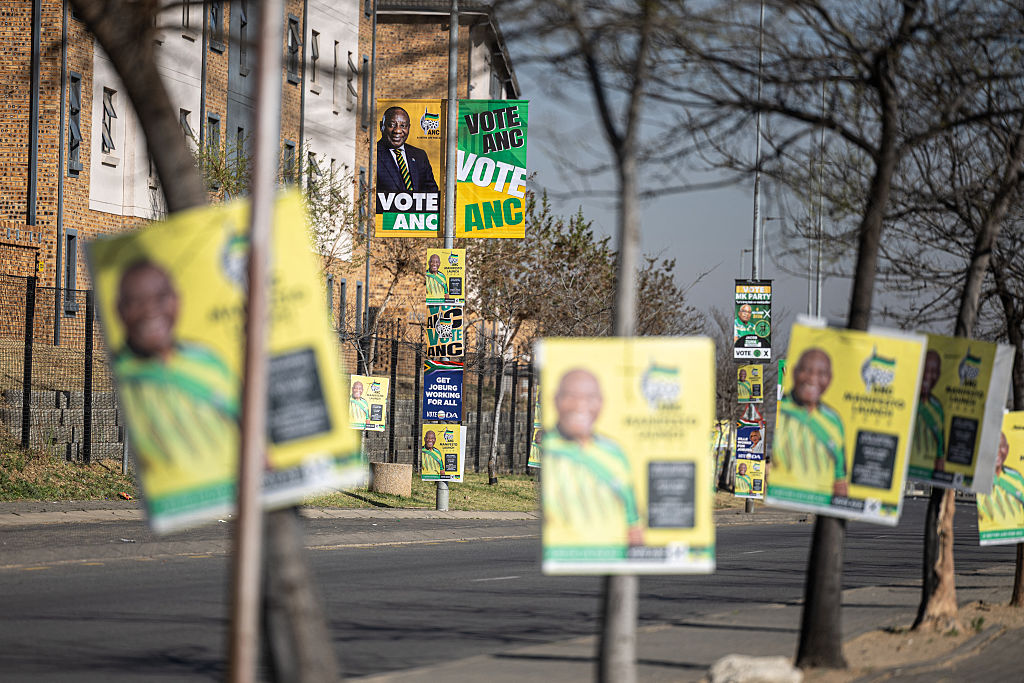
As South Africa gears up for its local government elections scheduled for November 4, the political atmosphere is charged with anticipation and competitiveness. According to a recent Ipsos survey, the African National Congress (ANC) is holding on to a slim lead in Johannesburg, the nation’s commercial heart, with 31% of voter support. This figure places the ANC just ahead of its main contender, the Democratic Alliance (DA), which has garnered 28% backing. These numbers reflect a dynamic electoral landscape that is crucial not only for Johannesburg but also for the overall political fabric of the country.
The political rivalry between the ANC and DA in Johannesburg has been a focal point of discussion, particularly considering the historical context of voter sentiments in the region. In the previous municipal elections five years ago, the ANC achieved 33.6% of the vote, while the DA secured 26.5%. This year’s polling indicates a tightening race, with indications that Johannesburg, along with other cities such as Ekurhuleni, Nelson Mandela Bay, and Buffalo City, may witness particularly hotly contested elections.
A notable aspect of the current electoral climate is the contrasting findings from different polling firms. An earlier poll conducted by a research entity with ties to former DA officials suggested a significant disparity in support, with the ANC reportedly at just 18% and the DA at a commanding 42%. Such discrepancies highlight the complexities and unpredictabilities of polling in political contests, emphasizing that voter intentions can shift dramatically as the elections approach.
In Johannesburg, the stakes are heightened due to widespread dissatisfaction over basic municipal services. Issues such as unreliable water supply and inconsistent waste collection have sparked public outcry and protests, drawing attention to the governance challenges facing the city. The mismanagement of municipal finances has further complicated the situation, prompting the National Treasury to halt funding temporarily. These factors create a backdrop of urgency for both parties as they seek to win the trust of voters.
The DA has turned to seasoned political leader Helen Zille, former mayor of Cape Town, to spearhead its campaign in Johannesburg. Her nomination signals the DA’s commitment to reversing its fortunes in a city that has long been a battleground for political power. Meanwhile, the ANC is yet to announce its candidate, leaving an air of uncertainty around its strategy moving forward.
Shifting focus to Cape Town, the DA’s stronghold, the Ipsos survey indicates that the party commands 46% support, although this figure falls short of an outright majority. The ANC trails at 26%, marking a significant decline from the DA’s previous election performance, where it achieved over 58% support. This decline raises questions about the DA’s administrative efficacy in Cape Town, which it has repeatedly showcased as a model of good governance. The municipality’s ambitious R40 billion ($2.5 billion) infrastructure investment program aims to improve basic services and foster a business-friendly environment, yet the effectiveness of these initiatives remains to be seen in the electoral results.
On the other hand, the eThekwini municipality, which includes Durban, presents a different narrative. The polling results show significant support for Jacob Zuma’s MK party, which is polling at a remarkable 55%. This positions the MK party ahead of both the DA at 17% and the ANC at a mere 10%. Such dominance signals a consolidation of the MK’s influence in the KwaZulu-Natal region, where it previously emerged as a major player in the 2024 general elections.
It is crucial to note that the Ipsos poll was conducted among a sample of 3,600 South Africans between June and July, with results carefully weighted to reflect the demographics of eligible voters. However, Ipsos also cautions that these figures should not be interpreted as definitive predictions of the final outcomes, as political landscapes can shift rapidly in the lead-up to elections. The margin of error, notably larger for specific metropolitan areas, adds another layer of unpredictability to the political forecast.
For traders and investors observing the electoral scene in South Africa, understanding the potential implications of these local elections is vital. Political stability and effective governance are essential for fostering a conducive investment environment. Any shifts in power dynamics could impact economic policies, infrastructure spending, and overall investor confidence. As the campaigns unfold, keeping a close eye on voter sentiments and the evolving political narrative will be essential for making informed decisions in the South African market.
In conclusion, the upcoming local elections in South Africa are set to be a litmus test for the ANC and DA, revealing not just voter preferences but also the broader implications for governance and economic stability. With critical issues at stake and rising public discontent, the results may signal significant changes in the political landscape that could resonate far beyond the local context. As the election date approaches, stakeholders must remain vigilant, ready to adapt to whatever changes the political winds may bring.